Categories
Surveillance Cameras

Monitored vs. Unmonitored Security Systems: Which One Truly Protects Your Home?

In today’s world, home security is no longer a luxury, it’s a necessity. Whether you live in a bustling city or a quiet suburb, protecting your property and loved ones is a top priority. One of the most important decisions homeowners face is choosing between a monitored security system and an unmonitored one. While both serve the purpose of safeguarding your home, they operate in very different ways and offer distinct advantages and limitations.

This blog explores the key differences, benefits, and drawbacks of monitored and unmonitored security systems to help you make an informed decision.

Understanding Monitored Security Systems

A monitored security system is professionally supervised 24/7 by a security company. When an alarm is triggered, whether due to a break-in, fire, or other emergency, the system automatically sends a signal to a monitoring center. Trained professionals then assess the situation and alert emergency services if necessary.

Key Features:

  • 24/7 professional monitoring
  • Immediate emergency response
  • Integration with fire, smoke, and carbon monoxide detectors
  • Mobile alerts and remote access

Advantages:

One of the biggest advantages of a monitored system is peace of mind. Even if you’re asleep, at work, or traveling, someone is always watching over your home. This constant surveillance ensures that emergencies are handled quickly, reducing potential damage or loss.

Additionally, monitored systems often deter criminals more effectively. The presence of a professionally monitored alarm system can discourage intruders from targeting your home in the first place.

Drawbacks:

The main downside is cost. Monitored systems usually require a monthly subscription fee, which can add up over time. Installation costs may also be higher, especially if professional setup is required.

Understanding Unmonitored Security Systems

Unmonitored security systems, also known as self-monitored systems, operate independently without professional oversight. When an alarm is triggered, the system typically sounds a loud siren or sends a notification directly to your smartphone.

Key Features:

  • No monthly monitoring fees
  • DIY installation options
  • Smartphone alerts
  • Basic alarm and sensor functionality

Advantages:

The biggest appeal of unmonitored systems is affordability. Since there are no recurring fees, they are a cost-effective solution for homeowners on a budget. They are also easy to install and maintain, making them ideal for renters or those who prefer a DIY approach.

Another benefit is control. You are directly responsible for monitoring alerts and taking action, which can be convenient for tech-savvy users who want full control over their security setup.

Drawbacks:

The major limitation is the lack of immediate professional response. If you miss an alert or are unable to respond quickly, the system cannot automatically contact emergency services. This delay can be critical in situations like break-ins or fires.

Unmonitored systems also rely heavily on your availability. If you’re in an area with poor network coverage or your phone is off, you may not receive alerts at all.

Key Differences Between Monitored and Unmonitored Systems

1. Response Time

Monitored systems provide instant professional response, while unmonitored systems depend on your personal action. This makes monitored systems more reliable during emergencies.

2. Cost Structure

Unmonitored systems are generally cheaper upfront and have no recurring fees. Monitored systems involve ongoing subscription costs but offer enhanced protection.

3. Ease of Use

Unmonitored systems are simple and user-friendly, often designed for quick DIY installation. Monitored systems may require professional setup but offer more advanced features.

4. Reliability

Monitored systems are more dependable, especially when you’re not available to respond. Unmonitored systems are only as effective as your ability to act on alerts.

5. Level of Protection

Monitored systems provide comprehensive security, including emergency dispatch services. Unmonitored systems offer basic protection, primarily acting as a deterrent.

Which System is Right for You?

Choosing between a monitored and unmonitored security system depends on your lifestyle, budget, and security needs.

Choose a Monitored System If:

  • You want 24/7 professional protection
  • You travel frequently or are often away from home
  • You prefer immediate emergency response
  • You are willing to pay monthly fees for added security

Choose an Unmonitored System If:

  • You are on a tight budget
  • You prefer a DIY setup
  • You are usually at home or can respond quickly to alerts
  • You want a basic deterrent without ongoing costs

Hybrid Options: The Best of Both Worlds

Some modern security systems offer hybrid solutions, allowing users to switch between monitored and unmonitored modes. This flexibility can be particularly useful if your needs change over time.

For example, you might use unmonitored mode during the day when you’re home and switch to monitored mode at night or while traveling. These systems provide a balance between cost and security.

The Role of Smart Technology

Advancements in smart home technology have significantly enhanced both monitored and unmonitored systems. Features like video doorbells, motion sensors, and smart locks can be integrated into your security setup, offering greater control and visibility.

Mobile apps now allow you to:

  • View live camera feeds
  • Receive instant alerts
  • Arm or disarm your system remotely
  • Communicate with visitors through video intercoms

These innovations make unmonitored systems more effective than ever, although they still lack the professional backup of monitored services.

Final Thoughts

Both monitored and unmonitored security systems have their place in modern home protection. Monitored systems excel in providing comprehensive, hands-off security with rapid emergency response, while unmonitored systems offer affordability and control.

Ultimately, the right choice depends on your personal preferences and circumstances. If maximum safety and convenience are your priorities, a monitored system is worth the investment. However, if you’re looking for a budget-friendly solution with basic protection, an unmonitored system can still serve you well.

By understanding the differences and evaluating your needs carefully, you can choose a security system that keeps your home safe and your mind at ease.
Categories
Surveillance Cameras

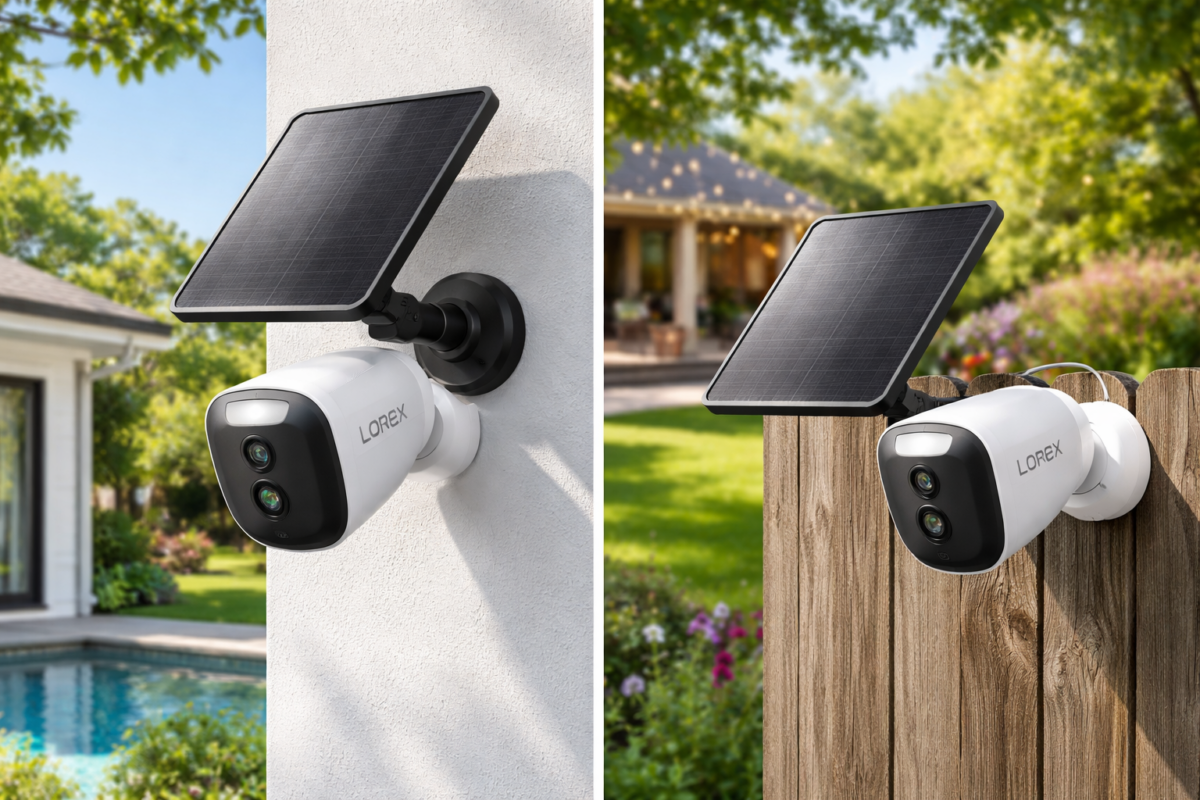
Lorex 2K Battery Camera Review: A Smarter Outdoor Camera with Built-In Deterrence

Lorex 2K Battery Camera with Solar Support Review

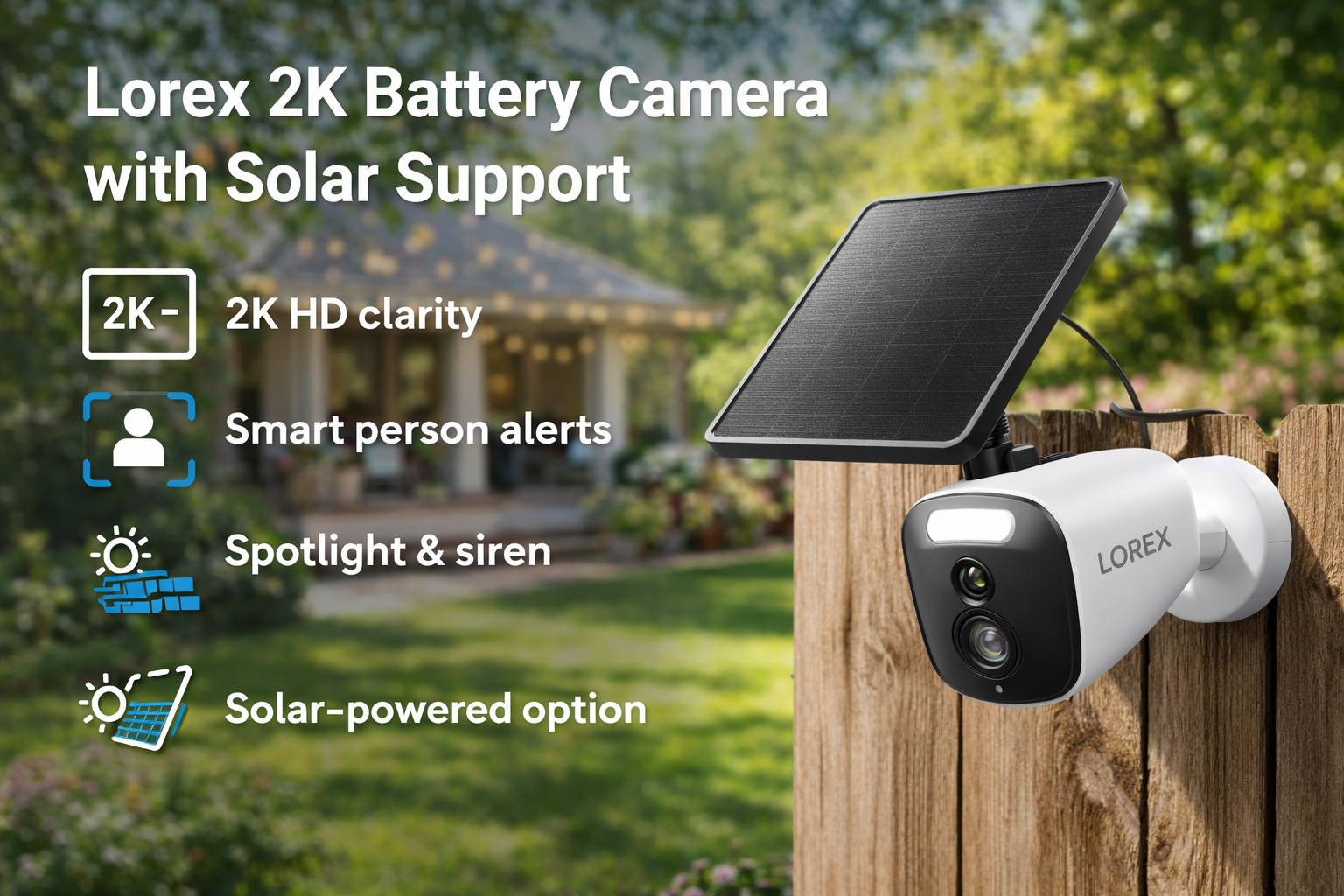
The Lorex 2K Battery Camera with Solar Support is designed for homeowners who want a more security-focused outdoor camera with built-in deterrence features, clearer video, and reliable long-term performance. Instead of just acting as a passive monitoring device, this camera actively helps protect your property.

What makes it stand out is the combination of 2K video clarity, smart detection, and active deterrence features like spotlight and siren. These are not just add-ons—they change how the camera works in real-world situations, turning it into a more responsive outdoor security tool.

When paired with solar support, the camera becomes even more practical. It reduces the need for frequent charging and allows for flexible placement around the property. For homeowners looking for a balance between performance, protection, and convenience, this is a strong contender.

2K resolution clarity Smart deterrence features Solar-powered support Wire-free outdoor setup

Quick Verdict

The Lorex 2K Battery Camera with Solar Support is a strong choice for homeowners who want more than just basic monitoring. It adds active protection features like spotlight and siren, making it more than a passive security camera.

If your goal is to both monitor and deter activity around your property, this camera offers a clear advantage over simpler models.

What Makes This Camera Different

The biggest difference with this Lorex camera is its focus on active security. Many cameras simply record footage and send alerts, but this one goes further by helping you respond to events in real time.

It includes features like a motion-activated spotlight and a built-in siren, which can act as a strong deterrent. This means the camera is not just watching—it is helping prevent unwanted activity before it escalates. :contentReference[oaicite:0]{index=0}

At the same time, it maintains strong core performance with 2K video, wide viewing angles, and smart detection. This makes it a well-rounded option that combines visibility, awareness, and protection.

Best Reasons to Consider It

Active deterrence: spotlight and siren built in

2K clarity: sharper than standard HD cameras

Solar compatibility: less manual charging

Smart alerts: person detection reduces noise

Wide coverage: up to 140° field of view

Video Quality and Visibility

The 2K resolution provides noticeably sharper footage compared to basic 1080p cameras. This becomes especially useful when reviewing recordings after an event, as it allows you to see more detail and understand what actually happened.

In real-world scenarios, better clarity means better decisions. Whether you are checking who approached your property, reviewing activity in your driveway, or monitoring deliveries, the extra detail makes the footage far more useful.

The camera also includes both IR night vision and color night vision support, allowing it to adapt to different lighting conditions. :contentReference[oaicite:1]{index=1}

This ensures that the camera remains effective during both day and night, rather than losing value in low-light conditions.

Smart Detection and Alerts

One of the most practical features is its smart detection capability. Instead of triggering alerts for every movement, the camera focuses on identifying people and relevant activity.

This significantly reduces false alerts caused by things like moving shadows or small animals. As a result, notifications become more meaningful and easier to act on.

For homeowners, this improves the overall experience. It turns the camera into a more reliable tool rather than something that constantly interrupts you with unnecessary alerts.

Smarter alerts also mean you can respond faster when something important actually happens.

Solar Power and Battery Performance

The combination of battery power and solar support is one of the biggest advantages of this camera. The solar panel helps maintain battery levels over time, reducing the need for frequent manual charging. :contentReference[oaicite:2]{index=2}

This is especially useful for cameras installed in hard-to-reach locations such as above garages, along walls, or near rooflines. Instead of regularly removing the camera, the solar setup helps keep it running continuously.

The system is designed to maintain battery charge rather than replace it entirely, meaning proper placement with sunlight exposure is important. :contentReference[oaicite:3]{index=3}

When installed correctly, this setup provides a much more convenient long-term experience compared to standard battery-only cameras.

Active Deterrence Features

This is where the Lorex camera stands out the most. It includes built-in deterrence features that actively help protect your property.

The motion-activated spotlight can illuminate areas when activity is detected, while the siren can be triggered to warn off unwanted visitors. :contentReference[oaicite:4]{index=4}

These features turn the camera into more than just a monitoring tool. They give homeowners the ability to respond immediately, even when they are not physically present.

For properties where prevention matters as much as monitoring, this is a significant advantage.

Where It Works Best

This camera is ideal for areas where both monitoring and deterrence are important. This includes driveways, front entrances, garages, side paths, and backyard access points.

It is particularly useful in areas where visibility alone may not be enough, and where having a visible deterrent can make a difference.

The wire-free design also allows for flexible placement, making it easier to expand coverage around your property without additional wiring.

Potential Limitations

While the camera offers strong features, it is still a fixed-position device. If you need wider coverage from a single camera, a pan-and-tilt model may be more suitable.

Solar performance also depends on sunlight exposure. In areas with limited sunlight, manual charging may still be required occasionally.

However, for most standard outdoor setups, these limitations are minor compared to the overall benefits.

Final Verdict

The Lorex 2K Battery Camera with Solar Support is a strong choice for homeowners who want both visibility and protection. It combines clear video, smart detection, and active deterrence into a practical outdoor security solution.

For those looking to move beyond basic monitoring and add a layer of active security, this camera stands out as a reliable option.

If your priority is a camera that not only records but also helps prevent incidents, this is one of the better choices available.

Bottom Line

Best for: active security and deterrence

Works well for: driveways, entrances, garages, outdoor areas

Main strengths: 2K clarity, spotlight, siren, solar support

Less ideal for: wide-area coverage from a single camera

Categories
Surveillance Cameras

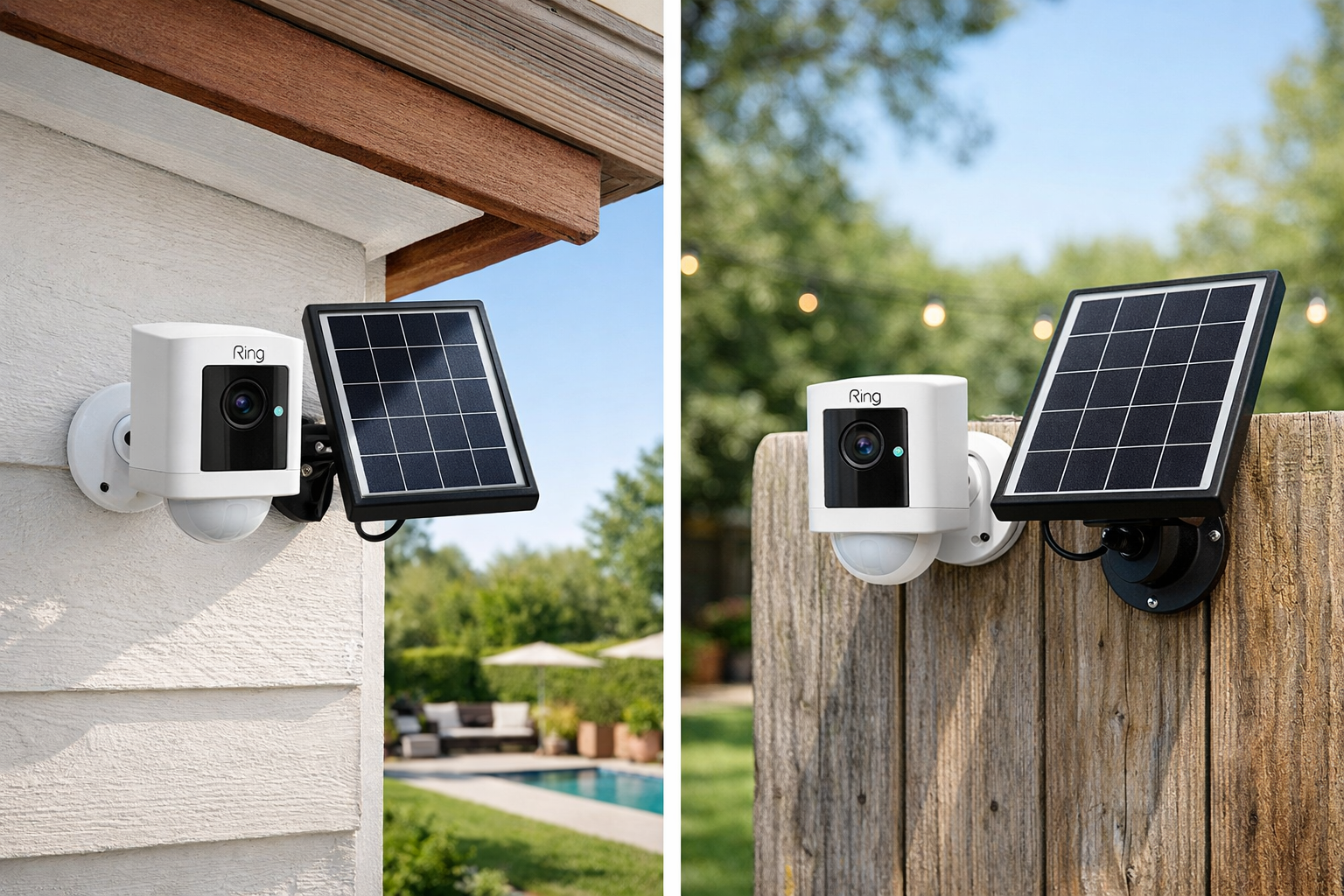
Ring Outdoor Cam with Solar Panel Review: A Simpler Outdoor Security Camera for Everyday Use

Ring Outdoor Cam with Solar Panel Review

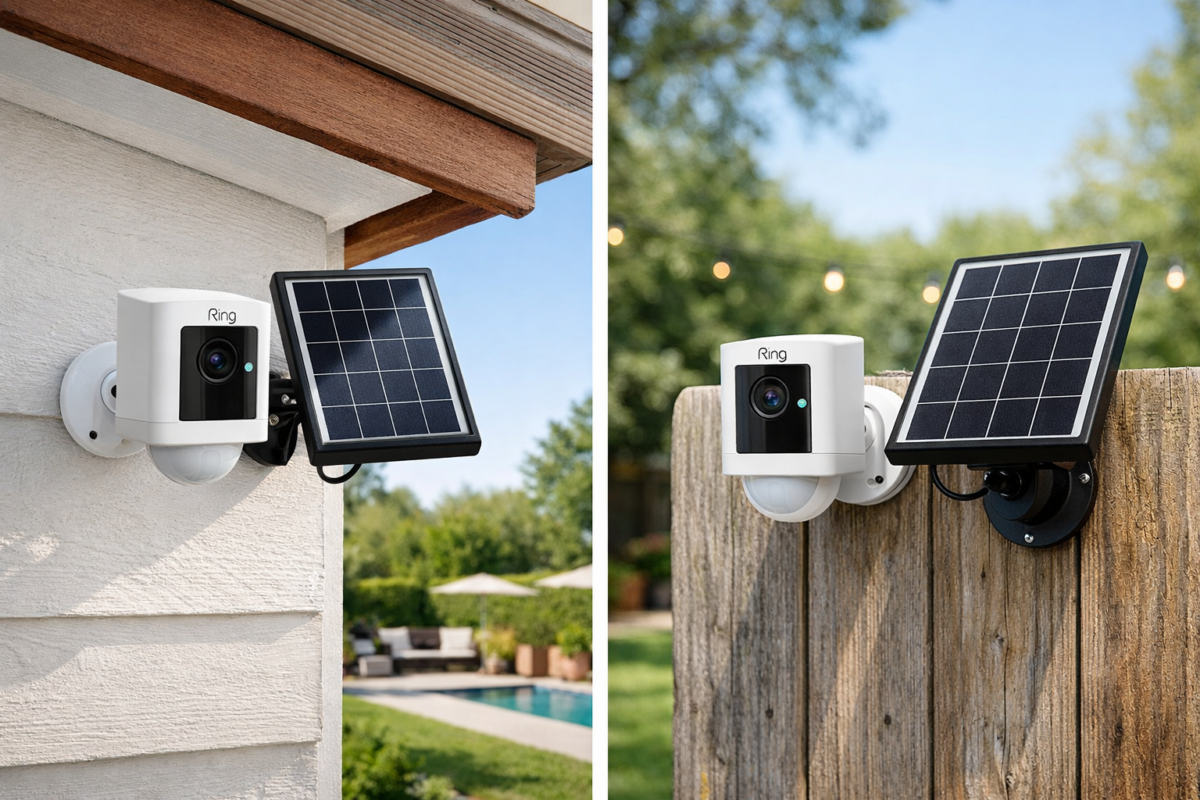
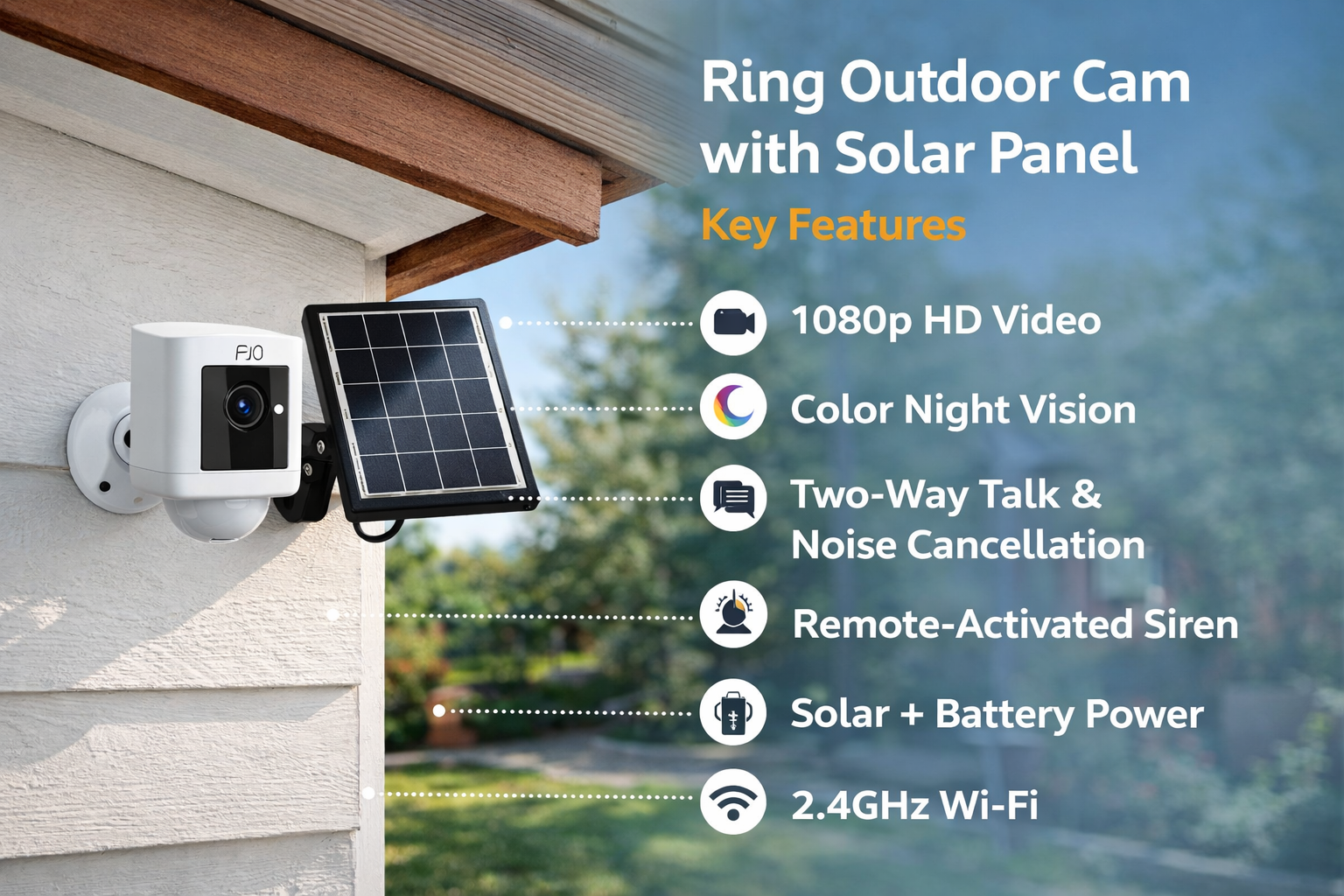
The Ring Outdoor Cam with Solar Panel is built for buyers who want a familiar, easy-to-manage outdoor security camera that fits naturally into a wider smart home setup. It is designed less as a premium specialist camera and more as a practical everyday option for people who want dependable outdoor monitoring, simpler app control, and lower-maintenance power through a battery-plus-solar combination.

That makes it especially appealing for homeowners who care about convenience just as much as camera performance. Many outdoor cameras look good on paper, but in real use, the difference often comes down to how easy the product is to install, how simple the app feels, and how little effort is needed to keep it running. The Ring Outdoor Cam with Solar Panel makes its strongest case in those areas.

Rather than trying to offer every premium feature possible, it focuses on a clear set of practical benefits. It gives buyers an outdoor-ready camera with good day-to-day visibility, familiar Ring app controls, solar-assisted battery charging, and flexible placement around the property. For many households, that is exactly the kind of balance that makes an outdoor camera easier to justify and easier to live with over time.

Wire-free outdoor setup Solar-assisted charging Simple Ring app control Strong fit for everyday home use

Quick Verdict

If you want an outdoor security camera that feels simple, familiar, and easy to manage, the Ring Outdoor Cam with Solar Panel is a strong option. It is best suited to buyers who value convenience, straightforward monitoring, and a connected smart-home experience over advanced premium features they may never actually use.

Its biggest strength is not that it tries to be the most technically ambitious camera in the category. Its strength is that it offers a cleaner ownership experience. For front doors, garages, side paths, smaller driveways, and general outdoor entry points, it gives homeowners a dependable setup that is easy to place, easy to monitor, and easier to maintain with solar support.

What Makes Ring Outdoor Cam with Solar Panel Attractive

The main reason to consider this camera is simplicity. Ring has built a strong reputation around products that are easy for normal homeowners to understand and use, and that same appeal carries over here. The Outdoor Cam with Solar Panel feels designed for buyers who do not want to overthink the process. They want to install a camera, connect it quickly, receive alerts, check footage through the app, and reduce battery maintenance as much as possible.

That makes it a particularly strong fit for common outdoor use cases. If you need a camera near the front of the house, beside the garage, above a side path, or close to a backyard entrance, this type of setup is very easy to understand. It offers the kind of visibility and convenience most homeowners actually need without asking them to learn a more technical system than necessary.

The solar panel also adds an important long-term convenience benefit. A standard battery camera can still be useful, but once you place it in a harder-to-reach location, regular charging becomes more frustrating. A solar-assisted setup makes the camera easier to own over time because it reduces how often you need to take it down and recharge it manually.

Best Reasons to Consider It

Easy ownership: familiar app and straightforward setup

Solar support: better long-term convenience outdoors

Flexible placement: useful for common entry and perimeter zones

Good everyday usability: practical rather than overcomplicated

Strong ecosystem fit: ideal for buyers already comfortable with Ring

Video Quality and Everyday Monitoring

For everyday outdoor home security, this camera is designed to deliver the kind of footage most homeowners actually rely on. It is well suited to routine monitoring around entrances, side access routes, front paths, porches, and smaller driveway areas. In these spaces, the main goal is usually clear general visibility, timely alerts, and an easy way to check what happened through the app.

That is where the Ring Outdoor Cam feels strongest. It is not trying to be a specialist camera for very large spaces or complex surveillance layouts. Instead, it works best when used as a practical outdoor monitoring tool for everyday household activity. Whether someone approaches the front path, a delivery is left near the entrance, or movement happens along the side of the property, the camera is designed to make those moments easier to review and understand.

Nighttime performance is also an important part of the appeal. For many buyers, a camera is only truly useful if it continues to provide meaningful visibility after dark. This model is positioned to give homeowners that extra confidence for outdoor areas that do not always have strong lighting, helping the camera stay relevant beyond daylight-only use.

Just as important is the fact that the whole experience is built around ease of use. A camera can have decent hardware, but if checking alerts or reviewing activity feels frustrating, it becomes less valuable over time. Ring’s ecosystem is appealing because it keeps the everyday process simple, and that adds to the overall usefulness of the camera in normal household use.

Solar Charging and Long-Term Convenience

One of the biggest practical benefits of choosing the Ring Outdoor Cam with Solar Panel is lower-maintenance ownership. For many buyers, the main frustration with wire-free outdoor cameras is not video quality but the fact that they eventually need to be taken down for charging. That gets especially annoying when the camera is mounted above a garage, along a high wall, or in another area that is not easy to access regularly.

Solar support helps reduce that problem. With a battery-plus-solar setup, the camera becomes easier to keep running with less direct attention. In the right conditions, that makes the overall experience feel much more convenient than relying on battery charging alone. For buyers who specifically want a camera that asks for less ongoing effort, this is one of the strongest reasons to choose the solar version instead of a standard battery-only model.

This also gives the camera more flexibility around the property. A front wall, garage side, fence line, or backyard access point can all be more realistic installation options when the camera does not depend on nearby power and does not need frequent manual charging. That kind of flexibility is what makes solar-powered outdoor cameras so useful for everyday residential security.

The real value here is not just technical. It is practical. A camera that stays working with less interruption is easier to trust, easier to leave in place, and more likely to keep doing its job without becoming another small maintenance task that homeowners start to ignore.

Where It Fits Best Around the Home

The Ring Outdoor Cam with Solar Panel is best suited to outdoor areas where homeowners want a dependable, general-purpose security view rather than more advanced specialized coverage. That includes front doors, porches, side entrances, garage approaches, back gates, smaller driveways, and similar locations where a fixed-position outdoor camera makes the most sense.

It is especially attractive for buyers who already like the Ring approach and want to expand coverage outside without adding something that feels completely different from the rest of their setup. That kind of consistency matters more than many people expect. When the app, controls, and notifications all feel familiar, the camera becomes easier to use well over time.

This product also makes sense for homeowners who care more about clean everyday usability than feature chasing. Not every property needs wider active movement tracking, dual-lens zoom, or more advanced camera behavior. Sometimes the better buy is the camera that is easier to install, easier to understand, and easier to maintain in the exact area that matters most.

What It Does Well in Real Use

The best thing about this camera is that it feels realistic. It does not depend on a complicated pitch to sound appealing. Buyers know what they are getting: a practical outdoor security camera with solar-assisted convenience and a user-friendly app experience. That clarity is part of the product’s strength.

In real use, that kind of clarity matters. Homeowners usually want three things from an outdoor camera: they want it to be easy to place, easy to check, and easy to keep running. The Ring Outdoor Cam with Solar Panel is attractive because it supports all three. It does not try to overwhelm buyers with a huge feature list. It focuses instead on being a camera people are actually likely to use properly.

That also means it is well suited to normal households rather than only tech-heavy setups. It works for people who want stronger outdoor awareness without making security feel like a more technical project than it needs to be. In many cases, that kind of straightforward usefulness is more valuable than chasing features that sound impressive but add little to everyday ownership.

Potential Limitations

The main limitation is that this camera is best understood as a practical fixed-position outdoor option, not a premium wide-area surveillance tool. Buyers who need more advanced active coverage from one position may find that a pan-and-tilt model or a more premium camera better matches their property.

Another limitation is that solar-assisted convenience still depends on placement and conditions. Like other products in this category, the camera will work best when installed with reasonable sunlight exposure and in a location that supports stable long-term use. Solar support reduces maintenance, but it does not remove the need for sensible installation choices.

It is also fair to say that buyers looking for the most advanced outdoor camera features may want more than this model is trying to offer. The Ring Outdoor Cam with Solar Panel is strongest when judged as an easy-to-own, easy-to-use outdoor security camera rather than a feature-heavy premium specialist.

Final Verdict

The Ring Outdoor Cam with Solar Panel is a strong choice for buyers who want a more convenient, familiar, and user-friendly outdoor security camera. Its biggest appeal is not complexity. Its appeal is that it makes outdoor monitoring feel easier to manage and easier to maintain over time.

For front doors, side entrances, smaller driveways, porches, garages, and backyard access points, it offers a sensible balance of visibility, convenience, and solar-assisted ownership. It is particularly easy to recommend to homeowners who prefer a simpler smart-home experience and want an outdoor camera that feels straightforward from day one.

If your priority is dependable outdoor monitoring with less hassle and a cleaner overall ownership experience, the Ring Outdoor Cam with Solar Panel deserves a place high on the shortlist.

Bottom Line

Best for: buyers who want an easy-to-manage outdoor camera with solar-assisted convenience

Works especially well for: front entrances, porches, garages, side paths, and smaller driveway areas

Main strengths: simple setup, familiar app experience, solar support, practical everyday usability

Less ideal for: buyers who need wider premium coverage or more advanced active camera behavior

Categories
Surveillance Cameras

Arlo Essential XL 2K Review: A Better Outdoor Camera for Longer Battery Life

Arlo Essential XL 2K Review

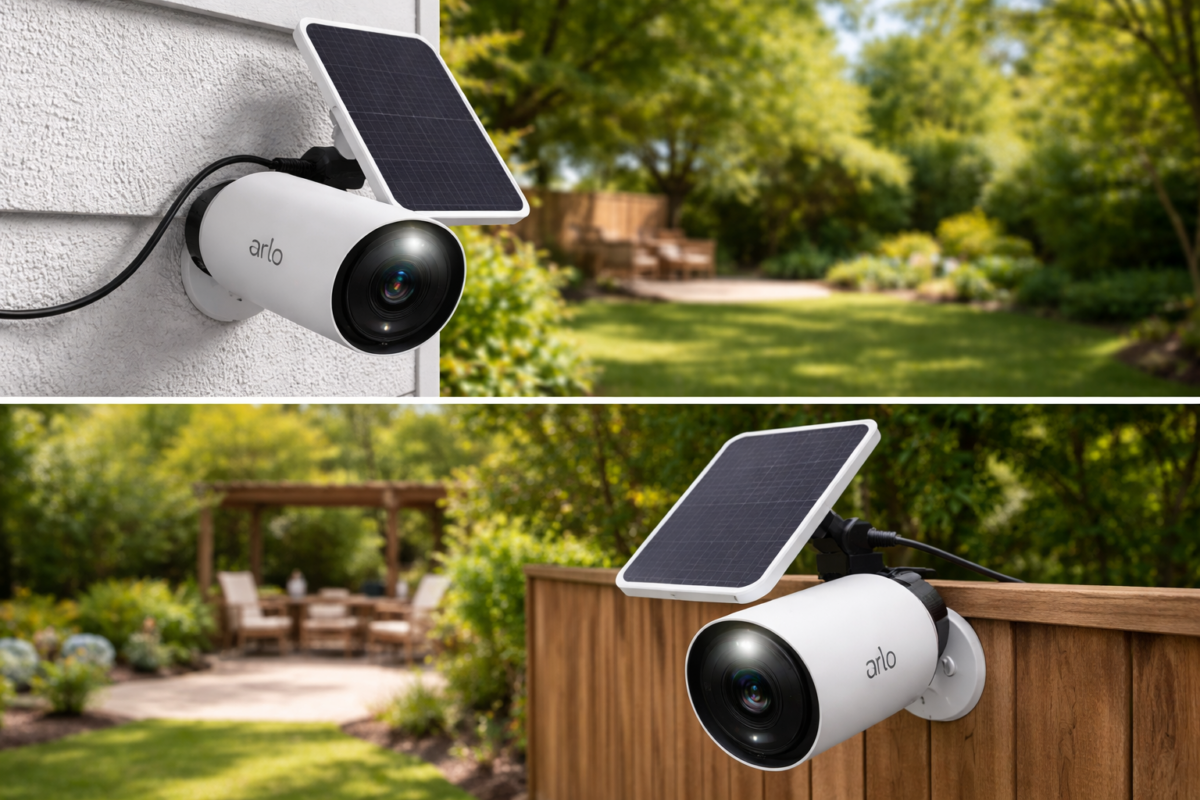
The Arlo Essential XL 2K is built for buyers who care most about convenience, battery endurance, and a simpler outdoor security setup. Instead of trying to compete as the most advanced camera in every category, it focuses on delivering strong everyday usability for homeowners who want better visibility around the home without dealing with constant recharging or a complicated wired installation.

That makes it especially appealing for people who want a camera they can place outside and manage with less effort over time. For many households, the biggest annoyance with wire-free outdoor cameras is not the video quality but the maintenance. If a camera needs frequent charging, it becomes less convenient very quickly, especially when it is mounted higher up or placed in a less accessible spot.

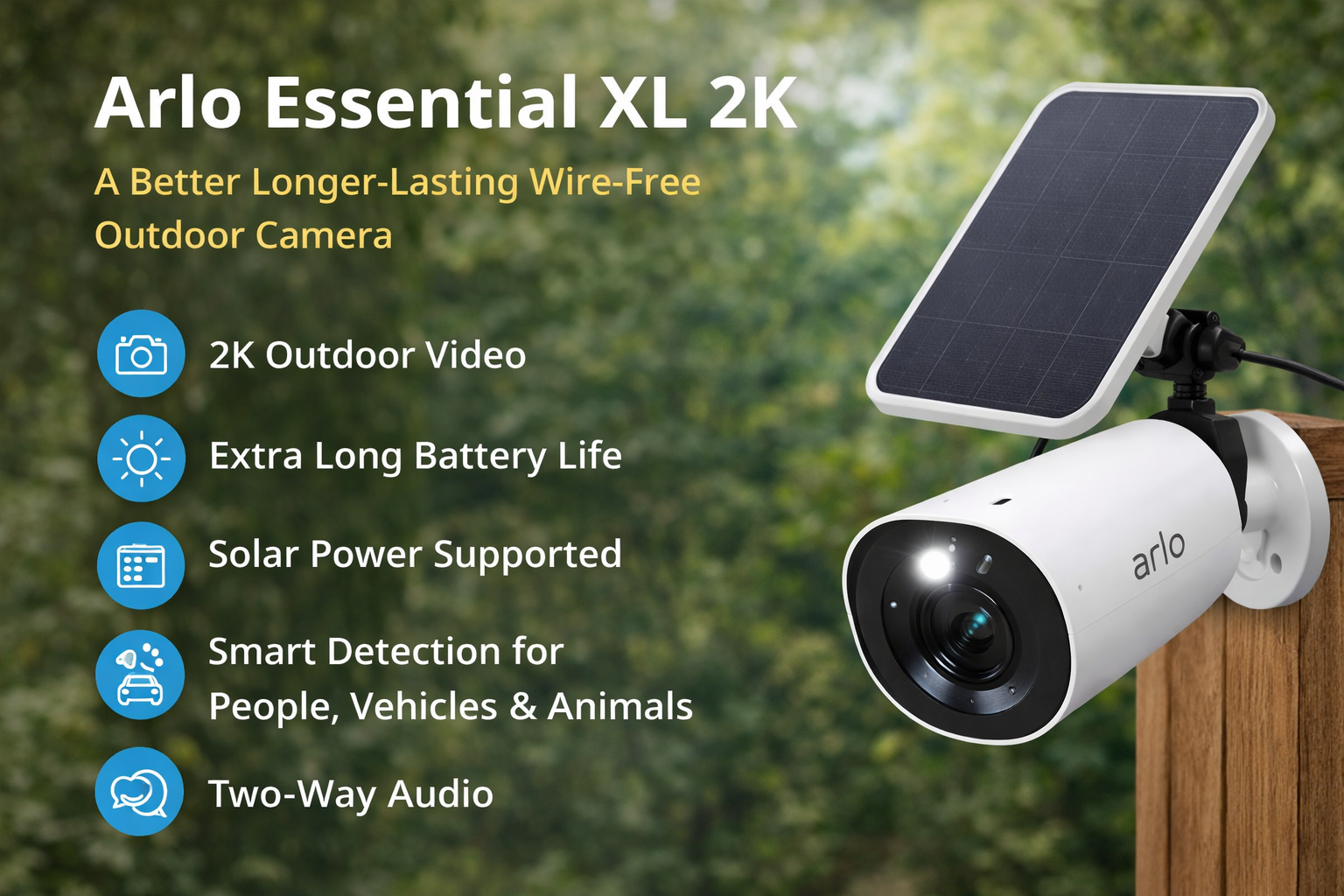
The Arlo Essential XL 2K is designed to solve that problem by putting battery life at the center of its value. It also adds the kind of features buyers expect from a modern outdoor camera, including clear 2K video, color night vision, motion alerts, two-way audio, and smart-home-friendly usability. The result is a camera that feels more like a practical long-term outdoor option rather than a short-term convenience gadget.

2K outdoor video Longer battery-focused design Solar-ready setup Simple wire-free installation

Quick Verdict

If your main goal is to reduce charging interruptions while still getting dependable outdoor video quality, the Arlo Essential XL 2K is a strong option. It is especially attractive for homeowners who want a camera for a front entrance, driveway, garage, side path, or backyard area where convenience matters just as much as image quality.

Its biggest strength is not that it tries to do everything. Its strength is that it does the important things well for normal outdoor home security. It gives buyers a clean, practical balance of better-than-basic video, simpler installation, and a battery-focused design that is easier to live with over time.

What Makes the Arlo Essential XL 2K Different

The main thing that separates the Arlo Essential XL 2K from many other outdoor cameras is the way it prioritizes battery endurance. A lot of wireless outdoor cameras promise convenience, but in everyday use, that convenience often falls apart when the camera needs more charging than expected. That is where the XL approach becomes important. This model is clearly aimed at buyers who want less interruption and a more stable day-to-day experience.

That matters even more when the camera is installed in an awkward position. A camera mounted near a garage roofline, above a driveway, along a side wall, or at the edge of a garden entrance is not something most people want to keep removing and recharging. A longer-running battery setup makes the whole idea of a wire-free outdoor camera far more practical.

The Arlo Essential XL 2K also stays attractive because it does not sacrifice the basics while pushing battery life. It still offers the features most buyers look for in this category, including sharper video than entry-level cameras, useful motion monitoring, night visibility, app-based access, and an overall setup that feels simple rather than overly technical.

Best Reasons to Consider It

Less frequent charging: built for longer outdoor use

2K video quality: clearer than basic HD-only options

Solar-compatible setup: better long-term convenience

Simple installation: easier for everyday home use

Good fit for common outdoor zones: practical rather than overcomplicated

Video Quality and Everyday Outdoor Monitoring

For a camera in this category, video quality plays an important role because buyers want more than just a basic alert when movement happens. They want footage that helps them understand what actually took place. The Arlo Essential XL 2K is positioned as a step above simpler HD cameras, making it better suited to driveways, front paths, garage approaches, side entrances, and similar outdoor areas where better detail is genuinely useful.

That extra detail matters most when you need to review activity rather than simply confirm that motion occurred. Whether someone approached the property, a delivery was left outside, or a vehicle moved in or out of view, the usefulness of the camera depends on whether the footage is clear enough to review with confidence.

In normal home use, this type of camera makes the most sense for buyers who want a dependable general-purpose outdoor security option. It is not trying to be a large-scale surveillance solution. It is trying to be a better everyday outdoor camera for properties where video clarity, reliable alerts, and lower-maintenance operation are the main priorities.

The Arlo app experience is also part of the overall value. For many homeowners, ease of use matters just as much as raw specifications. A camera that is straightforward to manage, easy to check remotely, and simple to review when something happens will usually feel more worthwhile over time than a product that only looks impressive on a feature list.

Battery Life, Solar Readiness, and Convenience

This is the area where the Arlo Essential XL 2K makes its strongest case. Buyers looking at this model are usually not just comparing video quality. They are comparing how easy the camera will be to live with after installation. That is where the longer battery-focused design becomes the key selling point.

For many homeowners, outdoor security becomes annoying when maintenance starts to outweigh convenience. If the camera works well but needs repeated charging, it becomes harder to justify, especially in less accessible mounting spots. A model designed around longer use between charges is easier to recommend because it delivers a more realistic version of wire-free security.

That convenience becomes even more useful when combined with solar support. A solar-compatible setup helps reduce the need for manual charging even further, making the camera a better fit for areas where long-term convenience matters. For people who want a lower-maintenance outdoor setup around the garage, driveway, backyard, or side passage, this kind of design makes a lot of sense.

The biggest advantage here is not just technical battery performance. It is lifestyle convenience. A camera that asks for less attention over time is often much more valuable in the real world than one that sounds impressive at first but becomes inconvenient after a few weeks of normal use.

Where the Arlo Essential XL 2K Fits Best

The Arlo Essential XL 2K is best suited to buyers who want dependable outdoor monitoring in areas that benefit from strong battery performance and simple installation. It is a particularly sensible choice for front doors, driveways, garages, backyard entrances, garden paths, and side passages where a wire-free camera can be mounted quickly and used with less ongoing effort.

It also fits buyers who prefer a cleaner smart-home-friendly experience rather than a complicated security setup. If the goal is to place a camera, connect it easily, receive alerts, and check footage when needed, this model makes a lot of practical sense. It is built more for ease of ownership than for feature overload.

Another strong fit is the homeowner who has already tried a battery camera and found the charging routine frustrating. In that situation, a longer-running XL model can feel like a genuine improvement rather than just another version of the same experience. It addresses one of the most common pain points in wire-free outdoor security.

What It Does Well in Real Use

One of the biggest strengths of the Arlo Essential XL 2K is that it is easy to understand. It does not rely on a complicated pitch. Buyers know exactly what type of value it is offering: clearer outdoor footage than very basic cameras, simpler wire-free installation, and a longer-running battery experience that should reduce maintenance over time.
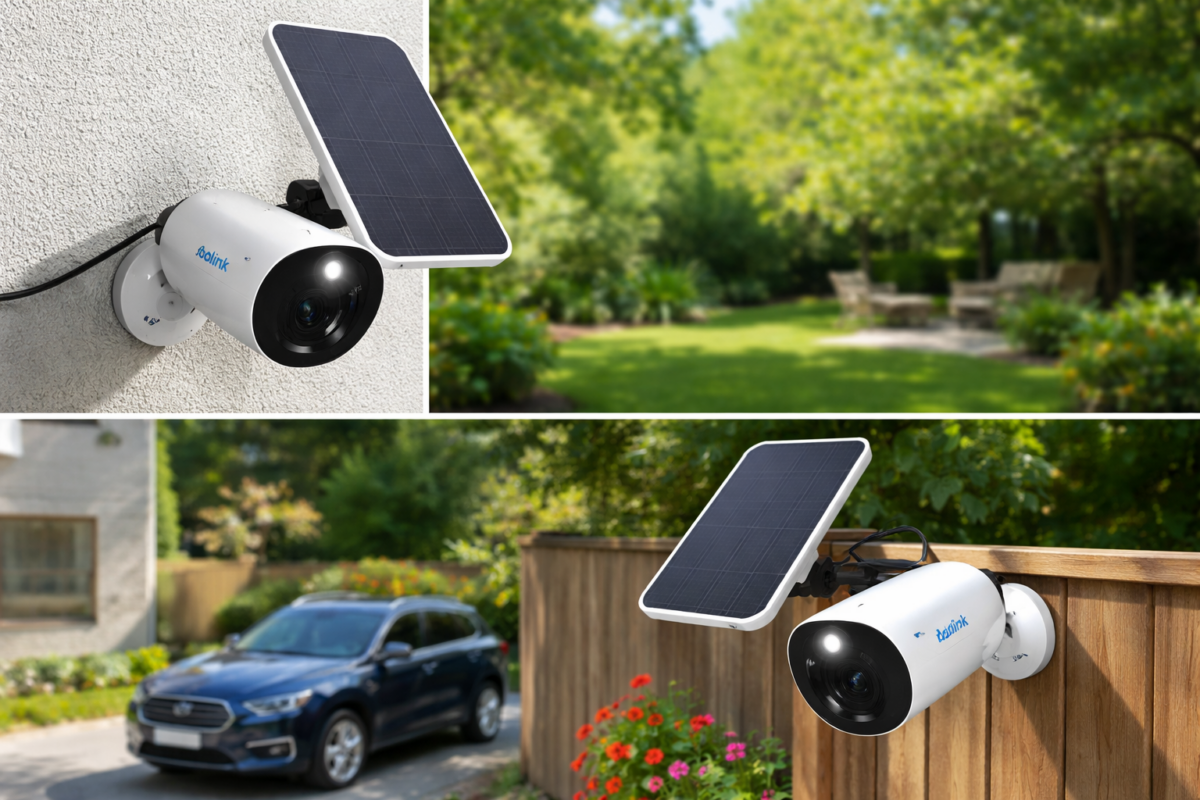
That kind of clarity is helpful because many outdoor security products try to overwhelm buyers with feature lists. In reality, what most homeowners want is much simpler. They want a camera that is easy to place, easy to check, useful at night, and less annoying to maintain. The Arlo Essential XL 2K is attractive because it focuses on those practical priorities.

It also feels like a good fit for ordinary properties. Not every home needs a premium multi-camera system or a motorized outdoor unit with wider active coverage. Many people simply want a trustworthy camera watching a predictable outdoor zone. For that kind of use, a model like this is often easier to justify than something more expensive and more advanced.

Potential Limitations

The main limitation is that this camera is not designed as a wide-area premium coverage solution. If your property needs broader active monitoring from one position, or if you want more advanced movement control, a pan-and-tilt style camera may still be the better fit. The Arlo Essential XL 2K is more about dependable fixed-position outdoor coverage than wider active surveillance.

Another limitation is that battery-focused cameras still depend on activity levels, placement, and outdoor conditions. Even when a camera is built around longer endurance, real-world usage will vary depending on how busy the monitored area is and where the camera is installed. A driveway with frequent motion will place different demands on the camera than a quieter side passage.

It is also worth saying that buyers looking for the absolute lowest-cost option may prefer a simpler model. The Arlo Essential XL 2K makes the strongest case when battery convenience is a priority. That is where its value becomes much clearer.

Final Verdict

The Arlo Essential XL 2K is a strong choice for homeowners who want a simpler, more convenient outdoor security camera with better battery-focused usability. It is not trying to be the most advanced camera in the category, and that is part of why it works so well. It focuses on the practical things buyers actually care about: clearer footage, easier installation, and less maintenance over time.

For front entrances, garages, driveways, side paths, and backyard monitoring, it offers a very sensible balance of convenience and performance. The longer-running XL battery concept gives it a meaningful advantage for people who want wire-free outdoor security without the same level of charging frustration that comes with many standard battery cameras.

If your priority is simple outdoor protection with less hassle and better day-to-day practicality, the Arlo Essential XL 2K deserves a place high on the shortlist.

Bottom Line

Best for: buyers who want longer battery-focused outdoor security with minimal hassle

Works especially well for: driveways, front entrances, garages, side paths, and backyard areas

Main strengths: 2K clarity, easier ownership, solar readiness, strong everyday practicality

Less ideal for: buyers who need wider active coverage or more advanced camera movement

Categories
Surveillance Cameras

Reolink Argus 3 Pro Review: A Better Solar-Ready Camera for Everyday Outdoor Security

Reolink Argus 3 Pro Review

The Reolink Argus 3 Pro is aimed at buyers who want a more capable wire-free outdoor camera without stepping into a more expensive premium category. It sits in a very practical position within the market: better than a basic entry-level battery camera, but still focused on straightforward home use rather than trying to be an all-in-one high-end surveillance system.

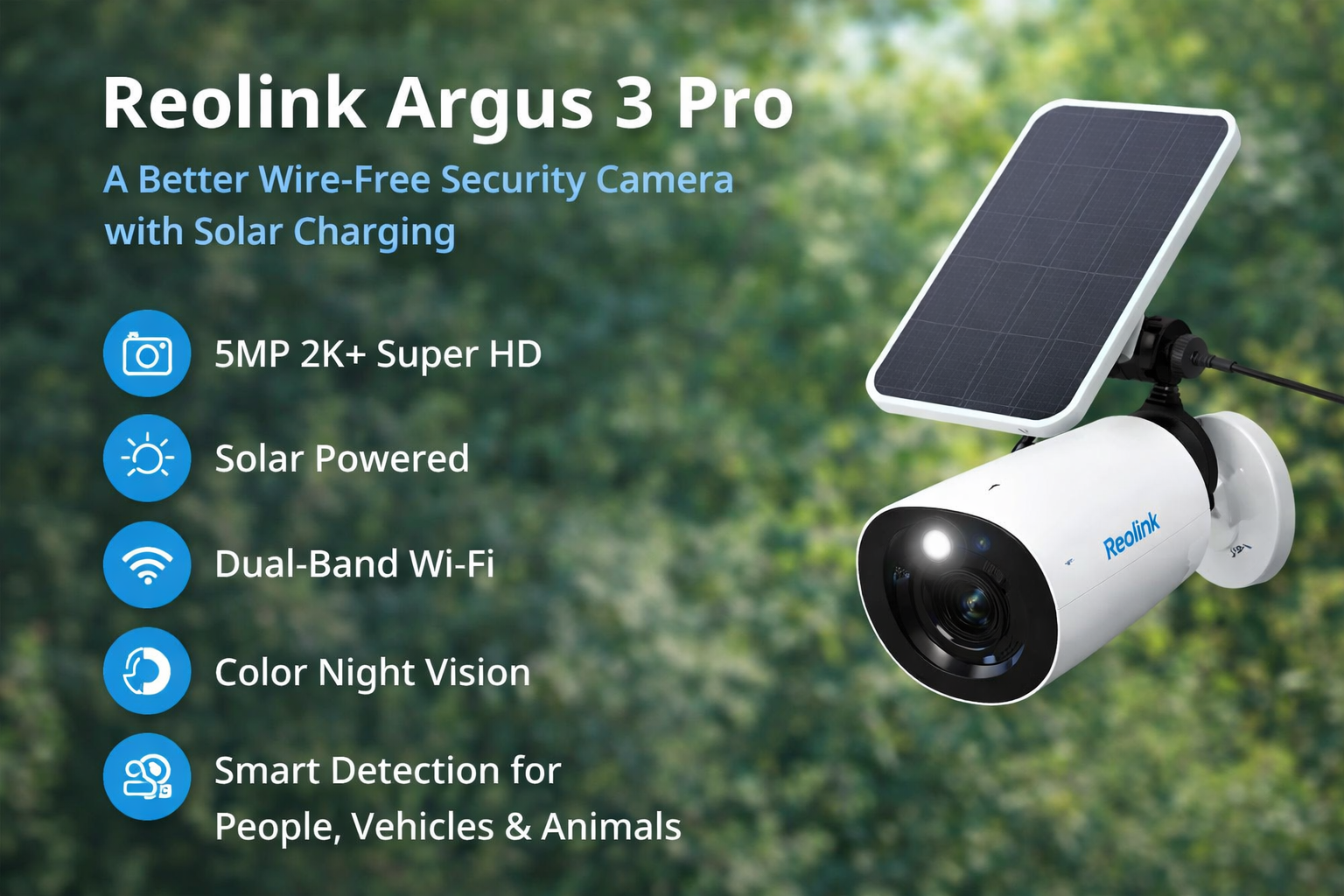
That makes it appealing for homeowners who want stronger everyday features without overcomplicating the setup. The camera combines 5MP 2K+ video, dual-band Wi-Fi, smart detection, color night vision, solar support, and local storage in a package that is easy to position around the home. Reolink presents it as a flexible outdoor option for driveways, backyards, sheds, and similar spaces where power outlets may not be easily available.

What makes the Argus 3 Pro more interesting than a basic solar-ready camera is the balance it offers. It is not only about being wire-free. It is also about getting better video quality, better connectivity, and smarter alerts without being pushed into a more complex installation or a monthly-fee-first experience. Reolink specifically emphasizes subscription-free smart alerts for people, vehicles, and animals, plus local storage and compatibility with the Reolink Home Hub lineup.

5MP 2K+ video Dual-band Wi-Fi Color night vision Solar-ready wire-free use

Quick Verdict

If you want a solar-ready wireless security camera that balances image quality, flexible placement, and everyday usability well, the Reolink Argus 3 Pro is a strong option. It makes the most sense for homeowners who want a more dependable outdoor camera for general perimeter coverage, entry points, garages, backyards, or side access areas without paying for more advanced features they may not actually use.

Its biggest strengths are practical rather than flashy. The 5MP 2K+ resolution is a meaningful step up from basic 1080p cameras, the dual-band Wi-Fi support is genuinely helpful for placement flexibility, and the smart detection features make it easier to get more relevant alerts. Reolink also supports solar charging via its 3W solar panel and local storage via microSD up to 512GB, which helps keep long-term ownership more straightforward.

What Makes the Argus 3 Pro Stand Out

The biggest reason to look at the Argus 3 Pro is that it covers the features many buyers actually need for day-to-day outdoor security without becoming overly complicated. Reolink positions it as a standalone battery camera with solar support, 5MP 2K+ detail, color night vision, and smart detection for people, vehicles, and animals. That combination puts it in a strong middle ground for practical outdoor monitoring.

Another important advantage is connectivity. Reolink highlights both 2.4GHz and 5GHz Wi-Fi support, which is not always available on simpler battery cameras. In practical use, that gives homeowners more flexibility when trying to balance signal strength, speed, and placement around the property. If you are mounting a camera near a garage, backyard, side entrance, or detached area, having both Wi-Fi bands available can make setup easier and live view more reliable.

The Argus 3 Pro is also clearly aimed at buyers who want lower ongoing costs. Reolink specifically promotes smart detection and alerts without subscription requirements, and the camera supports local storage as well as Reolink Home Hub / Home Hub Pro integration. For homeowners who prefer keeping footage local and avoiding unnecessary recurring costs, that is a real point in its favor.

Best Reasons to Consider It

Sharper everyday detail: 5MP 2K+ video is stronger than basic 1080p

Better connection flexibility: supports both 2.4GHz and 5GHz Wi-Fi

Useful smart alerts: person, vehicle, and animal detection

Lower-maintenance setup: battery powered with solar panel support

Local-first value: microSD and Home Hub support without forced subscription

Video Quality and Everyday Monitoring

For most buyers, video quality is one of the main reasons to consider the Argus 3 Pro over a cheaper wire-free camera. Reolink lists the camera at 5MP with 2880 × 1620 resolution, which it describes as 2K+ Super HD. That extra detail makes a noticeable difference on paper compared with basic 1080p models, especially when you are monitoring wider outdoor spaces and want footage that is more useful for reviewing motion around driveways, paths, front areas, or backyards.

The camera also supports color night vision using its built-in spotlight, which adds practical value for nighttime use. Instead of relying only on black-and-white footage, it can continue recording with more scene detail when lighting conditions drop. For outdoor monitoring, that can help make events easier to understand, especially around vehicles, entry points, and movement near the edges of the property. Reolink promotes this specifically as part of the camera’s day-to-night footage quality.

In everyday use, the Argus 3 Pro feels best suited to spaces where homeowners want strong general visibility rather than ultra-specialized coverage. It is not a pan-and-tilt model, so it is not meant to replace wider motorized cameras. But as a fixed-position outdoor unit, it offers a strong combination of clarity, spotlight-assisted color night viewing, and flexible wireless placement.

Reolink also supports customizable motion zones, smart playback filtering by time and event type, and remote live view, which are useful practical features rather than just marketing extras. These tools make it easier to find the clips that matter and reduce the amount of time spent digging through irrelevant events.

Battery Life, Solar Support, and Installation Convenience

The Argus 3 Pro is designed to be easy to place where power outlets are not accessible. Reolink specifically markets it as a rechargeable battery camera that can be paired with a 3W solar panel for ongoing solar-powered use. The company lists a 6000mAh rechargeable lithium-ion battery and promotes the camera as a zero-cable installation option for areas like driveways, backyards, sheds, and similar locations.

That is important because convenience is the main reason many people choose a camera in this category. The Argus 3 Pro is not supposed to compete with a wired 24/7 recording system. It is supposed to give you flexible outdoor coverage with less hassle and easier setup. If your goal is to mount a camera on a wall, fence, or outside structure without planning around mains power, it is much easier to justify a product like this.

Solar support adds to that convenience, especially in areas where taking the camera down for repeated charging would be annoying. Reolink frames the solar option as a way to keep the camera running with less maintenance, which makes it especially useful for garages, backyard walls, side access routes, and similar harder-to-reach mounting spots.

There are still limits, of course. Solar performance depends on placement, weather, and activity levels. But for buyers who want a lower-maintenance wire-free camera, the combination of rechargeable battery power and solar support remains one of the biggest reasons the Argus 3 Pro is attractive.

Smart Alerts, Storage, and Day-to-Day Value

One of the most practical parts of the Argus 3 Pro is that it gives buyers smart alerts without immediately pushing them toward a subscription-heavy setup. Reolink highlights person, vehicle, and animal detection, which helps reduce false alarms and keeps notifications more relevant for everyday use. That matters because the best security camera is often the one that sends alerts you actually pay attention to instead of constant background noise.
Storage flexibility is another strength. Reolink says the camera supports microSD cards up to 512GB, as well as integration with Reolink Home Hub and Home Hub Pro. Depending on your preference, that lets you keep things simple with local card storage or build toward a more organized multi-camera setup later.

The Argus 3 Pro also supports Google Assistant and allows up to 12 simultaneous streams according to Reolink’s support documentation. Those are the kinds of details that help the camera feel more complete for real households rather than just looking good in a comparison chart.

Overall, the value here comes from balance. You are getting sharper-than-basic resolution, solar readiness, smart detection, dual-band Wi-Fi, local storage support, and a flexible installation style without necessarily moving into the kind of price bracket or complexity that comes with more premium outdoor cameras.

Where It Fits Best

The Argus 3 Pro is best for homeowners who want a dependable outdoor camera for general perimeter coverage rather than one narrow use case. It is especially well suited to driveways, garages, backyards, side entrances, sheds, and fence-line views where flexible wireless placement matters and where dual-band Wi-Fi support can make installation easier. Reolink’s own product positioning highlights these kinds of scenarios clearly.

It also fits buyers who want to avoid unnecessary recurring costs. If you prefer local storage, smart alerts without a required plan, and the option to expand later into a Home Hub-based setup, the Argus 3 Pro makes a lot of sense. It is one of those cameras that feels particularly easy to recommend when the buyer wants practical flexibility more than premium headline features.

Where it becomes less ideal is if you need very wide-area active coverage from a single camera. Since it is a fixed-position model, it does not replace pan-and-tilt cameras for properties with lots of visual movement across broader spaces. But for a strong fixed-position outdoor camera, it is very well judged.

Potential Limitations

The biggest limitation is that the Argus 3 Pro is not a motorized coverage camera. If you need one device to actively scan or follow a very wide area, a pan-and-tilt model may be more appropriate. This camera is better understood as a strong fixed-position outdoor option rather than an all-in-one solution for large, visually complex spaces.

Another limitation is that it is motion-triggered rather than a wired continuous-recording system. Reolink’s support page lists motion-triggered recording as the recording mode for the camera, so buyers expecting an always-recording setup should be aware of that distinction.

Finally, while solar support is a real advantage, it still depends on proper sunlight exposure and reasonable activity levels. Like other cameras in this class, placement matters a lot. The Argus 3 Pro is easy to install, but it still needs a good Wi-Fi signal and sensible positioning to perform at its best.

Final Verdict

The Reolink Argus 3 Pro is one of the stronger options for buyers who want a well-balanced solar-ready wireless security camera without moving into a much more expensive premium tier. It does a lot of things right for everyday home use: sharper 5MP video, color night vision, smart detection, dual-band Wi-Fi, local storage support, and easy wire-free placement.

What makes it easy to recommend is that it focuses on practical outdoor monitoring rather than inflated feature overload. For a driveway, backyard, side passage, shed, or garage area, it offers a very sensible mix of clarity, convenience, and lower-maintenance setup. It is not the best choice for buyers who need motorized wide-area coverage, but for a fixed-position solar-ready camera, it is a very solid pick.

If your priority is flexible placement, better-than-basic video quality, and smarter alerts without unnecessary complexity, the Argus 3 Pro deserves a place high on the shortlist.

Bottom Line

Best for: buyers who want a balanced, solar-ready wire-free outdoor camera

Works especially well for: driveways, backyards, side access, garages, and sheds

Main strengths: 5MP 2K+ video, dual-band Wi-Fi, color night vision, smart detection, local storage

Less ideal for: buyers who need pan-and-tilt style wider active coverage

Categories
Surveillance Cameras

TP-Link Tapo C410 Kit Review: A Simple Solar Security Camera That Gets the Basics Right

TP-Link Tapo C410 Kit Review

The TP-Link Tapo C410 Kit is designed for buyers who want a simpler route into solar-powered outdoor security without paying for a more premium camera system than they actually need. Instead of focusing on advanced pan-and-tilt movement or a dual-lens design, this model puts more emphasis on the things many homeowners care about most: simple installation, good everyday image quality, lower-maintenance battery support, and a cleaner overall setup for outdoor monitoring.

That makes it a very different kind of product from higher-tier solar security cameras. The Tapo C410 Kit is not trying to be the most advanced outdoor camera on the market. It is trying to be one of the more practical options for people who want solar support, useful 2K detail, person detection, and flexible placement without moving into a more expensive or complicated system.

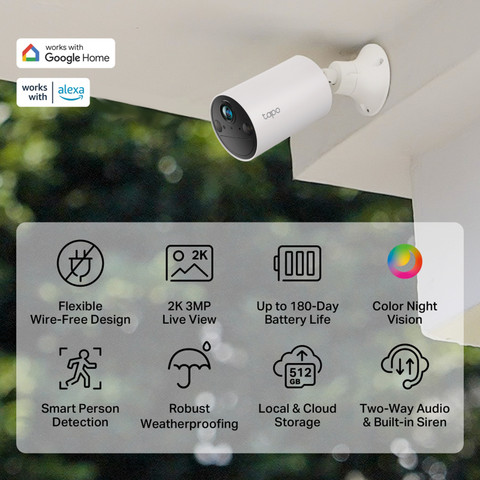
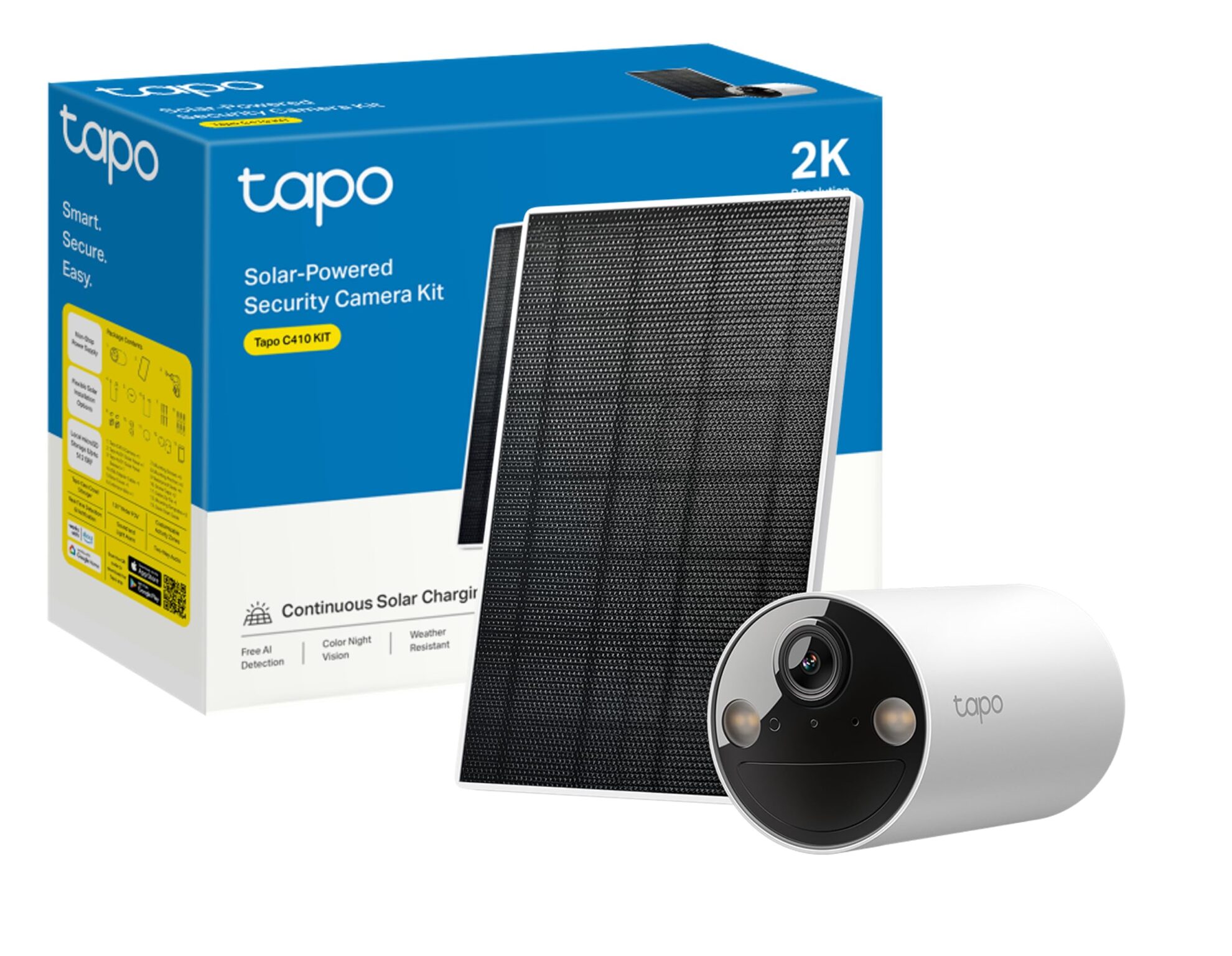
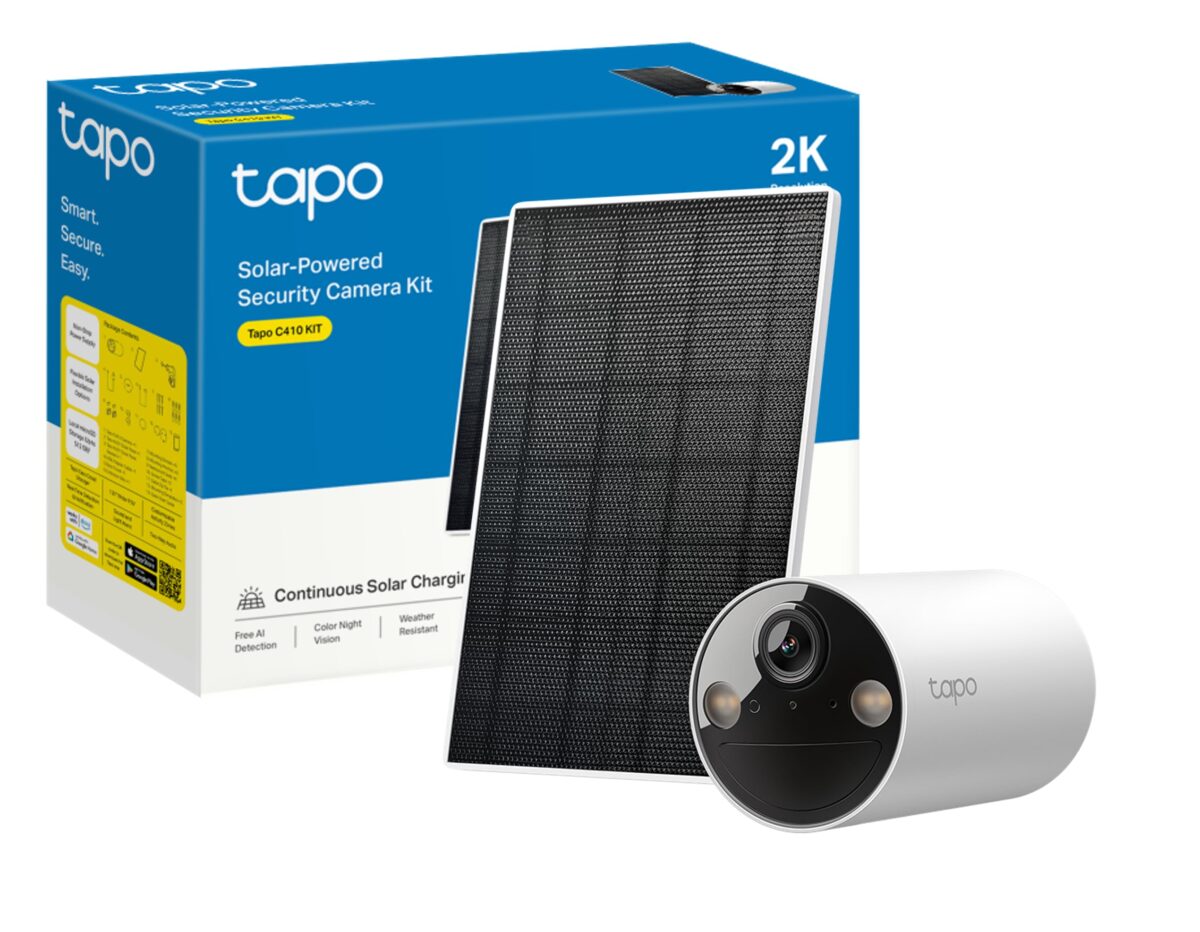
On TP-Link’s current product pages, the Tapo C410 Kit is positioned as a solar-powered wire-free kit with 2K 3MP video, color night vision, IP65 weather resistance, smart person detection, and local microSD storage up to 512GB. TP-Link also says the camera can offer up to 180 days of battery life in lab test conditions and that around 45 minutes of sunlight can be enough in specified scenarios, though real-world performance will still vary by weather, settings, and activity levels.

2K 3MP clarity Solar-powered kit Color night vision Wire-free outdoor setup

Quick Verdict

If you want a solar-powered outdoor camera that feels straightforward, balanced, and easier to justify for everyday home use, the TP-Link Tapo C410 Kit is a strong contender. It is especially appealing for homeowners who do not necessarily need premium tracking or wider motorized coverage, but still want clear footage, useful alerts, color night vision, and a cleaner installation process.

Its biggest strength is value through simplicity. The Tapo C410 Kit is easier to recommend to buyers who want a practical solar camera for entry points, smaller driveways, gardens, side paths, and general perimeter monitoring. It is not the most advanced solar security camera available, but it does a good job of focusing on the features that matter for normal day-to-day home security.

What Makes the Tapo C410 Kit Attractive

The biggest reason to consider the Tapo C410 Kit is that it offers a more approachable solar-powered security setup for buyers who do not want a complicated system. The camera is wire-free, the solar panel is included as part of the kit, and the overall positioning is clearly aimed at practical outdoor coverage rather than premium feature stacking.

That matters because many homeowners do not need a camera that pans across wide spaces or uses multiple lenses. In many cases, they simply want a reliable outdoor camera that can be placed near the front of the property, along a side passage, overlooking a small driveway, or close to a garden entrance without needing power cables or frequent manual charging.

TP-Link also gives the Tapo C410 Kit a useful set of everyday features rather than just headline claims. The current product information highlights 2K 3MP recording, smart person detection, color night vision, two-way audio, local storage up to 512GB, and IP65 weather resistance. That gives it a practical feature balance for buyers who want clear, usable monitoring without paying for a more advanced security platform than their property really needs.

Best Reasons to Consider It

Simple setup: easier to place around the property

Solar kit included: better convenience for outdoor use

2K/3MP video: solid clarity for everyday monitoring

Local storage support: up to 512GB microSD

Balanced value: strong mix of useful features without overcomplication

Image Quality and Daily Use

For most buyers, the first real question is whether the Tapo C410 Kit delivers enough quality to make outdoor footage genuinely useful. TP-Link positions the camera as a 2K 3MP model with a wide-angle view and full-color night vision, which puts it in a strong position for everyday home monitoring rather than just basic motion snapshots.

That level of detail is usually enough for common outdoor use cases such as monitoring a front path, driveway entrance, parked car area, side gate, or garden access point. You are not buying this camera because it is supposed to outperform a high-end premium surveillance system. You are buying it because it offers a sensible level of clarity for a wire-free solar product that is designed to be practical and easier to maintain.

Night performance is another area where the Tapo C410 Kit looks appealing. TP-Link says the camera supports full-color night vision and built-in spotlights, with effective nighttime color viewing up to about 30 feet in current product materials. That is a useful feature for buyers who do not want outdoor footage to drop into less informative low-detail night clips whenever the light falls away.

For many homeowners, the real value is not just the resolution number itself. It is the combination of decent clarity, color night vision, and person detection in a simpler outdoor package. That makes the camera easier to live with and more likely to provide footage that is actually worth reviewing when something happens.

Solar Charging and Battery Convenience

The main reason to buy a camera like this is convenience, so solar performance matters a lot. TP-Link says the Tapo C410 can deliver up to 180 days of battery life in laboratory testing and notes that around 45 minutes of sunlight can be enough in stated working scenes with up to 100 triggered events per day, although actual performance depends on environmental conditions and usage.
That is important because it tells you what this camera is trying to do: reduce maintenance rather than eliminate all battery concerns under every condition. If the camera is installed in a position with decent daylight and activity is within a normal range, the included solar support should make the setup far easier to manage than a standard battery camera that has to be removed and charged more often.

The Tapo C410 Kit is especially attractive for harder-to-wire outdoor spots. A smaller driveway, side entrance, garden wall, fence line, or detached structure can all be reasonable use cases where a simple solar-powered camera makes much more sense than running power or choosing a maintenance-heavy battery-only model.

TP-Link also notes that the camera can be charged via USB Type-C and that third-party 5V regulated solar or charging devices may work, though the company recommends its own compatible accessories and says charging and waterproof performance can vary with other hardware.

Storage, Smart Alerts, and Everyday Value

One of the better parts of the Tapo C410 Kit is that it does not force buyers into a cloud-only approach. TP-Link says the camera supports local microSD storage up to 512GB, while also offering its Tapo Care cloud service as an optional extra. That flexibility is useful because some buyers want the lower long-term cost and direct control of local storage, while others prefer cloud conveniences and extended alert history.

The camera also includes smart person detection, which is one of the more practical features for this type of outdoor setup. Instead of treating every movement the same way, person detection helps reduce false alerts and makes notifications more relevant in normal home use. For many properties, that can make the difference between a camera that feels useful and one that becomes annoying after a week of constant unnecessary alerts.

From a value perspective, this is where the Tapo C410 Kit makes a solid case. It gives buyers a usable balance of image quality, solar support, color night vision, local storage, person detection, and weather resistance without pushing them toward a more expensive premium-tier system. That kind of balance is often exactly what makes a product easier to recommend.

Where It Fits Best

The Tapo C410 Kit is best suited to buyers who want a reliable outdoor camera for practical areas around the home rather than large, complex spaces that demand wider motorized coverage. It makes the most sense for front entrances, side passages, small to medium driveways, garden access points, sheds, and similar outdoor zones where straightforward visibility matters more than advanced camera movement.

It is also a particularly good fit for buyers who are moving up from basic indoor or entry-level battery cameras and want something more suitable for outdoor security without taking a huge step into a much more expensive system. In that sense, it fills a very useful middle ground.

If your goal is to add solar-supported outdoor monitoring with less hassle, fewer charging interruptions, and more practical everyday performance, this camera fits that role well. If your goal is broader premium coverage across a very large space, then a more advanced model may still be a better match.

Potential Limitations

The Tapo C410 Kit is a strong practical option, but it still has clear limits. The first is that it is designed around straightforward outdoor coverage, not advanced premium monitoring. Buyers looking for pan-and-tilt coverage, dual-lens zoom-style monitoring, or broader intelligent tracking will likely find it more basic than higher-tier alternatives.

Another limitation is that solar support still depends on conditions. TP-Link’s battery and sunlight claims are based on lab conditions and stated usage assumptions, so real-world performance will always depend on sunlight, placement, temperature, settings, and how often the camera is triggered.

It is also worth remembering that this is a value-oriented solar kit. That is one of its strengths, but it also means it is best judged by how well it handles normal home security tasks rather than whether it can outperform more expensive cameras in every category.

Final Verdict

The TP-Link Tapo C410 Kit is one of the better choices for buyers who want a simpler, more practical solar-powered outdoor camera without overspending on premium features they may not need. Its strongest qualities are balance, usability, and everyday convenience. It offers enough clarity, enough smart functionality, and enough flexibility to make a real difference for common outdoor security needs.

It is not trying to be the most advanced solar camera available, and that is actually part of why it works so well. For smaller to medium outdoor areas, entry points, and general home monitoring, it gives buyers a clean, sensible package with fewer complications and solid overall value.

If you want a solar camera that feels straightforward, capable, and easier to justify for everyday use, the Tapo C410 Kit is a strong option to put high on the shortlist.

Bottom Line

Best for: buyers who want balanced value and simpler solar-powered outdoor security

Works especially well for: front paths, smaller driveways, side entrances, and garden access points

Main strengths: 2K clarity, color night vision, local storage, person detection, included solar support

Less ideal for: buyers who need wider premium coverage or advanced tracking features

Categories
Surveillance Cameras

Eufy SoloCam S340 Review: Stronger Coverage, Better Detail, Less Hassle Review

Eufy SoloCam S340 Review

The Eufy SoloCam S340 is one of the more interesting outdoor security cameras in its category because it is not trying to win on one feature alone. Instead, it combines solar charging, a wire-free setup, dual-camera coverage, pan-and-tilt movement, and zoom-focused detail into a product that feels designed for homeowners who want broader outdoor visibility without moving into a more complex wired system.

On paper, that already sounds appealing. In practice, the bigger question is whether the camera actually justifies its position as a premium solar-powered outdoor option. For many buyers, the answer will depend on whether they need wider property coverage and more visual flexibility from a single camera rather than simply wanting a basic motion-triggered unit over a front door or path.

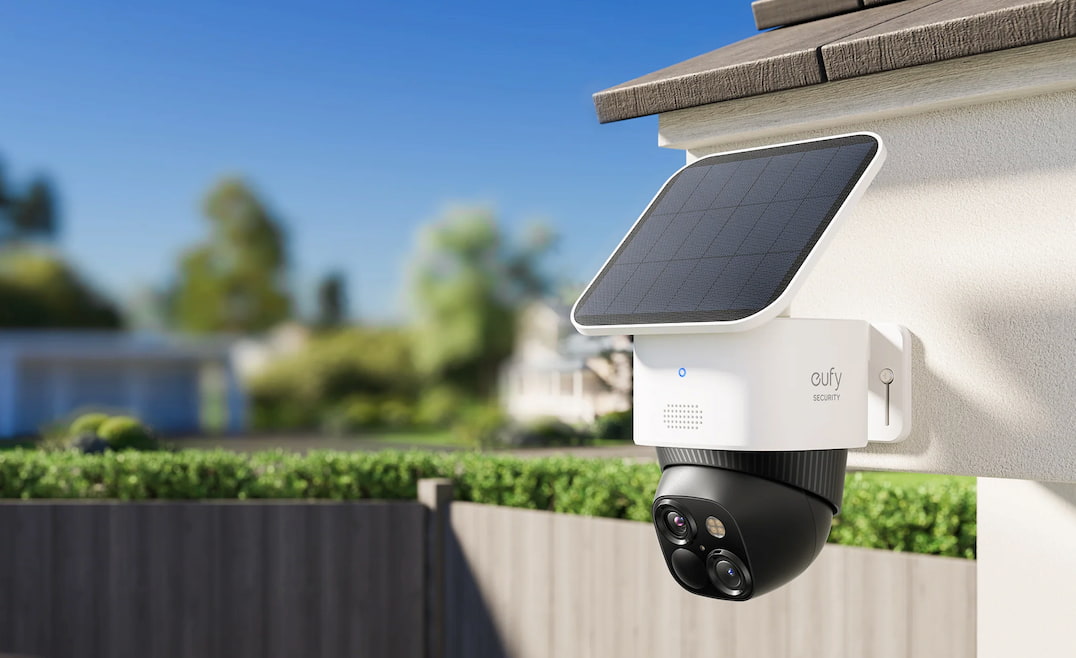
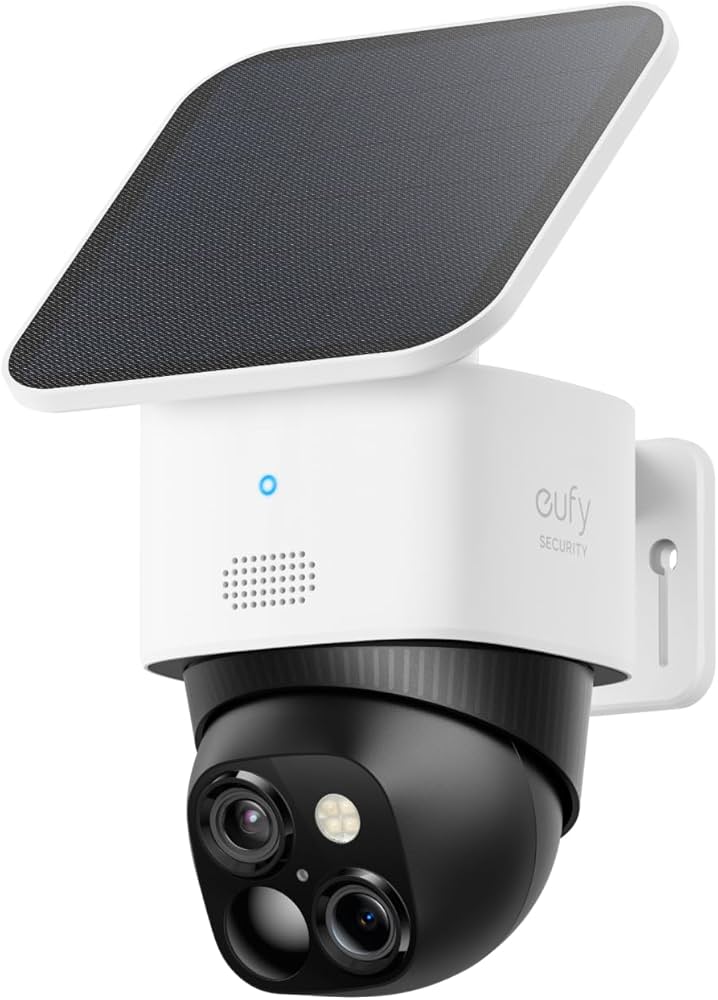
The SoloCam S340 uses a dual-camera design with a 3K wide-angle lens and a 2K telephoto lens, plus 8× hybrid zoom and motorized 355° pan with 70° tilt. Eufy positions it as a camera that can cover more area and capture better detail at distance than a typical fixed-lens wire-free model. It also supports solar charging via the included removable panel and can work with HomeBase 3 for expanded AI features. :contentReference[oaicite:1]{index=1}

Dual-camera design 3K + 2K clarity 355° pan coverage Solar-powered outdoor use

Quick Verdict

If you want a solar-powered outdoor camera that can do more than watch one narrow fixed angle, the Eufy SoloCam S340 is a very strong option. Its biggest strength is not just image quality on its own, but the combination of wider coverage, better zoom capability, and easier long-term placement flexibility. For a driveway, wider front area, detached garage approach, or side access route, it offers more practical visibility than many simpler battery cameras.

This is the type of camera that makes the most sense when you want one unit to do more work. Instead of placing several budget cameras just to reduce blind spots, the SoloCam S340 gives you a more capable single-camera approach with broader viewing control and more useful detail at distance. It will not be the cheapest option, but it is one of the more compelling choices for homeowners who want a meaningful upgrade in outdoor monitoring rather than just a basic alert camera.

What Makes the SoloCam S340 Stand Out

The biggest reason the SoloCam S340 stands out is that it addresses a very common weakness in many wire-free cameras: limited perspective. A standard fixed outdoor camera can work well for a front door or one narrow entry point, but it becomes much less useful when you need to watch a wider driveway, a larger front garden, a shared access route, or a side path that does not fit neatly into one fixed frame.

That is where the SoloCam S340 starts to feel more premium. Its 355° pan range and 70° tilt range are designed to widen coverage, while the dual-lens setup is designed to give you both broader context and better detail. Eufy also promotes up to 40 feet of detailed viewing and 8× hybrid zoom, which helps explain why the camera is better suited to larger outdoor areas than many basic entry-level solar models. :contentReference[oaicite:2]{index=2}

It also helps that the solar panel is removable rather than completely fixed into a single rigid position. That gives you more freedom when balancing the best camera angle against the best sunlight exposure, which is important for real-world outdoor installation. Eufy says the included solar options can collect more energy than the camera typically uses in average day-and-night operation under good conditions, although real-world results still depend heavily on placement and weather. :contentReference[oaicite:3]{index=3}

Best Reasons to Consider It

Broader coverage: more useful for wider outdoor zones

Dual-lens setup: stronger balance of context and detail

Solar support: lower-maintenance outdoor use

Wire-free install: easier placement around the property

Local storage: built-in storage with no required monthly fee


Video Quality and Everyday Monitoring Performance

For a camera in this category, video clarity is one of its most important selling points. Eufy’s current specs describe the SoloCam S340 as using a 3K wide-angle lens and a 2K telephoto lens, with hybrid 8× zoom. That combination matters because it is trying to solve two problems at once: seeing enough of the overall scene, while still being able to inspect activity with more useful detail than a typical single-lens camera. :contentReference[oaicite:4]{index=4}

That makes the S340 especially attractive for driveways, front parking areas, detached outbuildings, and larger approach paths. In these locations, it is not enough for the camera to simply detect movement. You also want a better chance of seeing who was there, what direction they moved, whether a vehicle entered or left, and whether activity happened near the edges of the property rather than only directly in front of the lens.

The SoloCam S340 is also more interesting than a basic outdoor camera because it is not limited to passive observation. Eufy highlights on-device AI-powered tracking, human and vehicle detection, and expanded human recognition when paired with HomeBase 3. In everyday terms, that means the camera is built not just to notice movement, but to follow and interpret it more intelligently than a low-cost motion-only model. :contentReference[oaicite:5]{index=5}

That said, performance still depends on how well the camera is positioned. A strong camera placed too low, pointed poorly, or installed in a weak Wi-Fi zone will still underperform. This is not a magic solution on its own. But if installed thoughtfully, it offers a level of flexibility and situational awareness that is hard to get from a simpler fixed-angle battery camera.

Installation, Solar Charging, and Long-Term Convenience

One of the strongest parts of the SoloCam S340 is the balance between capability and installation ease. Eufy describes it as a wire-free design with a quick installation process, and that matters because cameras in this tier are often bought by homeowners who want more coverage without committing to full hardwiring. :contentReference[oaicite:6]{index=6}

The included solar panel is a major part of the value proposition. On the current product pages, Eufy says the removable solar panel can collect enough energy in good conditions to support ongoing use, and some regional product pages note around two hours of direct sunlight daily as a useful benchmark for continued operation. The company also states the camera can run up to around three months on battery on its own, although day-to-day results depend on activity, weather, and placement. :contentReference[oaicite:7]{index=7}

That is important because solar support is only valuable when it actually reduces maintenance. In the right position, the S340 has the potential to become a much easier camera to live with than a standard battery unit that needs repeated manual charging. For cameras mounted higher up or in less accessible areas, that can be a meaningful benefit over time.

The removable solar design also gives the SoloCam S340 a practical edge. You are not forced to compromise between the best camera angle and the best sunlight angle in the same way you might be with a more rigid all-in-one setup. That flexibility can make a real difference when installing the camera above a garage, on a fence line, or near a wider front approach.

Storage, Fees, and Smart Features

For many buyers, recurring costs are an important part of the buying decision. Eufy promotes the SoloCam S340 as having built-in local storage and no required monthly fee, which makes it appealing to homeowners who want a more self-contained camera rather than a subscription-first setup. Current product specs list built-in 8 GB eMMC storage. :contentReference[oaicite:8]{index=8}

The SoloCam S340 also becomes more capable when paired with HomeBase 3. Eufy notes that while human and vehicle detection run locally on the camera, connecting to HomeBase 3 can upgrade the system with stronger human recognition and broader AI capabilities. That means buyers can start with the camera on its own and expand later if they want deeper ecosystem functionality. :contentReference[oaicite:9]{index=9}

This flexibility is one of the more attractive parts of the product. It allows the S340 to serve both as a capable standalone camera and as part of a more structured Eufy setup. For many homeowners, that is a better long-term position than being locked into a system that only makes sense once several other products are added immediately.

Where the SoloCam S340 Fits Best

The SoloCam S340 makes the most sense for buyers who need more than a simple front-door camera. It is best suited to properties where wider coverage, more detail, and better camera flexibility are genuinely useful. That includes driveways, broader front approaches, side access routes, detached garages, fence-line views, and larger garden entrances.

It is also a good fit for buyers who want fewer compromises from a wire-free camera. If your main frustration with cheaper outdoor models is that they miss too much of the scene, do not zoom well enough, or require too much manual charging, this model is much better positioned to solve those issues.

On the other hand, if all you need is a very simple motion camera for one narrow entrance, the SoloCam S340 may be more camera than you need. Its value becomes much clearer when you actually benefit from its wider field control, better zoom, and more capable outdoor coverage.

Potential Downsides

No camera is perfect, and the SoloCam S340 is no exception. The first thing to keep in mind is that it is still dependent on good placement. A camera with broader capabilities does not automatically perform well if it is installed in a poor Wi-Fi zone, shaded too heavily for solar support, or mounted at an angle that reduces the benefit of its pan-and-tilt coverage.

It is also more premium than a basic solar camera, so buyers looking for the lowest-cost option may not see the value immediately. The S340 makes the strongest case when you actually need its extra flexibility and coverage. If you do not need dual lenses, zoom, AI tracking, or wider area monitoring, a simpler and cheaper model may still be enough.

Another limitation is that this is not marketed as a true 24/7 continuous recording camera. It is designed around motion-based monitoring, battery efficiency, and solar-supported convenience rather than the type of always-recording setup some buyers may expect from a fully powered wired system. :contentReference[oaicite:10]{index=10}

Final Verdict

The Eufy SoloCam S340 is one of the better solar-powered outdoor security cameras for homeowners who want more capable coverage from a single wire-free unit. Its strongest qualities are not just the headline specs, but how those specs combine into a more practical outdoor camera: broader viewing control, stronger detail, better zoom, solar convenience, and a more flexible installation experience.

It is not the cheapest route into outdoor security, but it is a very sensible upgrade for buyers who have outgrown basic fixed-angle battery cameras. If your property includes a wider driveway, front area, side passage, or detached outdoor zone that needs a more watchful camera, the SoloCam S340 is one of the more convincing options in its category.

For the right buyer, this is less about buying a flashy feature list and more about buying a camera that can genuinely cover more of the property with less hassle over time.

Bottom Line

Best for: homeowners who want wider outdoor coverage from one solar-powered camera

Works especially well for: driveways, front yards, side access, and detached garage areas

Main strengths: dual lenses, zoom, pan coverage, solar flexibility, local storage

Less ideal for: buyers who only need a basic narrow-angle entry camera

Categories
Surveillance Cameras

Best Wireless Security Cameras With Solar Power for 24/7 Monitoring

Best Solar Powered Wireless Security Camera

Solar powered wireless security cameras are one of the most practical choices for homeowners who want easier outdoor protection without the hassle of running wires or constantly removing batteries for charging. A good model gives you the flexibility to monitor key areas around the property while keeping installation simple and long-term maintenance lower than many standard battery cameras.

For many buyers, the main appeal is convenience. You can place a solar-powered camera in areas where wiring would be awkward, expensive, or unnecessary, such as driveways, side gates, garages, sheds, rear gardens, fences, and front entry points. With the right placement and enough daylight, these cameras can offer reliable day-to-day monitoring while reducing the need for frequent manual charging.

The best solar powered wireless security camera should do more than just stay charged. It should also deliver clear footage, useful motion alerts, dependable app controls, and a setup that works well for the size and layout of your property.

Wire-free setup Outdoor-ready coverage Lower maintenance Ideal for driveways, yards and entry points

Top Products Worth Considering

If you are searching for the best solar powered wireless security camera, the smartest approach is to compare products based on real-life use rather than just marketing claims.

Eufy SoloCam S340
Best Overall

Eufy SoloCam S340

The Eufy SoloCam S340 stands out as one of the strongest all-round choices for homeowners who want more detailed outdoor monitoring with broader visual coverage.

  • Great fit for larger front yards, driveways, and side access points
  • Useful if you want stronger zoom and broader coverage
  • A smart pick for buyers who prefer fewer ongoing add-on costs
TP-Link Tapo C410 Kit
Best Value

TP-Link Tapo C410 Kit

A strong value-focused option for buyers who want a cleaner, simpler route into solar-ready outdoor monitoring.

  • Balanced mix of price, clarity, and straightforward installation
  • Good for entry points and smaller yards
  • Useful for buyers who want a cleaner DIY setup
Reolink Argus 3 Pro
Best for Flexible Placement

Reolink Argus 3 Pro

A dependable choice for buyers who want flexible placement, solid image quality, and a feature set that works well for everyday home protection.

  • Strong choice for general perimeter coverage
  • Good fit for homeowners who want wireless flexibility
  • Good balance of convenience and outdoor durability
Arlo Essential XL 2K
Best for Long Battery Life

Arlo Essential XL 2K

A strong option for users who care about reducing charging interruptions and keeping day-to-day upkeep simple.

  • Useful for harder-to-reach mounting spots
  • Suitable for users who want fewer manual recharges
  • Good for outdoor zones where convenience matters
Ring Outdoor Cam with Solar Panel
Best for Smart Home Ecosystem

Ring Outdoor Cam with Solar Panel

A familiar option for buyers who want a simple app experience and a camera that fits into a broader connected home setup.

  • Works well for front doors, porches, garages, and side paths
  • Appeals to users who prefer an easy-to-manage connected setup
  • Good fit for buyers who value app convenience
Lorex 2K Battery Camera
Best for System Expansion

Lorex 2K Battery Camera with Solar Support

A useful option for buyers thinking beyond a single-camera setup and wanting broader system expansion over time.

  • Well suited to larger properties
  • Good for multi-camera coverage
  • A practical direction for future upgrades

How to Choose the Right Solar Powered Wireless Security Camera

Choosing the right model starts with understanding how you plan to use it. A camera positioned above a narrow front path has different priorities from one watching over a full driveway, rear garden, or detached garage.

Start by looking at placement, coverage needs, image quality, app usability, and sunlight exposure. A well-placed camera with dependable motion alerts and steady charging support will usually deliver much better long-term value.

  • Choose higher detail if you need to identify faces or packages clearly
  • Pick better coverage if you want to reduce blind spots
  • Look for smart detection to cut down on unnecessary alerts
  • Consider local storage if long-term value matters to you
  • Think about sunlight and mounting position before buying

Best Fit by Use Case

For wider outdoor coverage: Eufy SoloCam S340

For balanced value: TP-Link Tapo C410 Kit

For flexible placement: Reolink Argus 3 Pro

For longer battery-focused use: Arlo Essential XL 2K

For connected setups: Ring Outdoor Cam with Solar Panel

For broader system expansion: Lorex 2K Battery Camera

What Makes a Solar Powered Wireless Security Camera Worth Buying?

A worthwhile solar powered wireless security camera should make outdoor monitoring easier, not more frustrating. The biggest benefit is freedom of placement, which makes it much simpler to protect gates, driveways, garages, fences, and rear areas of the property.

Another major advantage is reduced maintenance. With solar support, the goal is to make the camera more self-sustaining so that everyday use feels easier and more reliable.

In practical terms, the best models are the ones that combine useful outdoor coverage, dependable alerts, reasonable battery support, and a simple overall experience.

Who Should Buy a Solar Powered Wireless Security Camera?

These cameras are especially useful for homeowners who want to improve outdoor coverage without paying for a more complex wired installation. They are ideal for people who want a cleaner setup, more flexible placement, and less day-to-day maintenance.

If you have a driveway, a rear garden entrance, a detached outbuilding, or any outdoor area where running power would be inconvenient, this type of camera is often worth considering first.

Why Solar Powered Wireless Security Cameras Are Becoming More Popular

More homeowners are looking for security cameras that are easier to install, easier to maintain, and flexible enough to work in different outdoor areas without complicated setup. That is one of the main reasons solar powered wireless security cameras have become so popular. They offer a practical middle ground between fully wired security systems and basic battery cameras that need more frequent charging.

For many properties, outdoor coverage is often needed in places where power access is not convenient. Driveways, side gates, fences, detached garages, sheds, and rear garden entrances are all examples of areas that can be difficult or expensive to wire properly. A solar powered wireless camera makes these spaces much easier to monitor because it can be installed where it is actually needed rather than where power happens to be available.

Another reason these cameras are increasingly attractive is that buyers want lower-maintenance security solutions. Traditional battery-powered cameras can still be useful, but repeated charging becomes frustrating over time, especially if the camera is mounted higher up or placed in a less accessible spot. Solar support helps reduce that problem by keeping the battery topped up more consistently when the camera is positioned in a location with good daylight exposure.

Ease of installation also plays a major role. Many homeowners do not want a complicated installation project for a single outdoor camera. They want something that can be mounted quickly, connected to Wi-Fi, adjusted through an app, and used without major disruption. Solar powered wireless models are appealing because they support that kind of simpler setup while still offering practical security benefits for everyday use.

Where These Cameras Work Best Around the Home

The best place to install a solar powered wireless security camera depends on the layout of the property and the kind of activity you want to monitor most closely. In many cases, the most valuable spots are the ones that are difficult to cover with a wired system or that benefit most from a flexible camera position.

Driveways are one of the most common examples. A well-placed outdoor camera can help monitor parked vehicles, visitor arrivals, delivery activity, and movement near the front of the property. Wider driveways usually benefit from a camera that offers stronger image detail and a broader field of view, while smaller spaces may only need a more straightforward model with dependable motion alerts and clear footage.

Front doors and entry paths are another strong use case. These areas often experience regular movement from deliveries, visitors, and general day-to-day activity. A camera placed near the main entrance can help create a clearer record of who approached the property and when, while also improving convenience for homeowners who want quick app alerts and a simple outdoor monitoring setup.

Rear gardens, side access paths, fences, and detached outbuildings can also be ideal positions. These are often the parts of a property where wired installation is least convenient, which makes solar powered wireless cameras especially useful. Instead of treating these areas as secondary coverage zones, homeowners can place cameras where they make practical sense and maintain better visibility around the property perimeter.

Key Features That Matter Most Before You Buy

Not every solar powered wireless security camera is equal, even when product pages make them look similar. Before choosing one, it helps to focus on the features that will make the biggest difference in day-to-day use rather than being distracted by long spec lists alone.

Video quality is one of the first things to consider. Higher-resolution cameras can provide better detail when you need to review movement around a driveway, entry point, or outdoor path. This can make it easier to identify faces, vehicles, or package activity with more confidence. Clearer footage is especially valuable in wider spaces where a lower-detail camera may not capture enough useful information.

Motion detection quality is also important. A camera that sends constant unnecessary alerts can quickly become annoying rather than helpful. Stronger detection systems make it easier to separate meaningful activity from less important movement, which can improve the overall experience and make the alerts more useful in practice.

Battery support and solar charging consistency should also be near the top of the list. The whole point of choosing a solar powered camera is to reduce manual charging and lower long-term upkeep. That means the camera should not only work well on paper, but also fit the sunlight conditions and placement options available around your home.

App usability matters more than many buyers expect. Even a camera with decent hardware can feel frustrating if the app is confusing, slow, or difficult to manage. Simple settings, easy playback access, useful motion notifications, and straightforward setup often make a bigger difference over time than minor feature claims that rarely affect everyday use.

Common Mistakes to Avoid When Choosing a Solar Security Camera

One of the most common mistakes is choosing a camera based only on price. A lower-cost model may look appealing at first, but it may not be the best fit for the size of the area you want to monitor or the level of detail you expect. In some cases, spending a little more on stronger image quality, smarter motion alerts, or better coverage can lead to a much more useful camera over time.

Another mistake is ignoring placement conditions before buying. Solar support depends heavily on where the camera and panel will be positioned. If the chosen location receives very limited sunlight, even a strong camera can become more inconvenient to use. It is always worth thinking about mounting position, direction, and daylight exposure before deciding which model makes the most sense.

Some buyers also focus too much on brand familiarity and not enough on actual use case. A well-known brand can be a positive factor, but the better question is whether the camera fits your property and priorities. A model that is excellent for a small front entrance may not be the right choice for a large driveway or wider yard, even if it comes from a popular name.

Another issue is underestimating Wi-Fi coverage. Outdoor cameras still depend on a stable connection for alerts, live view, and app performance. If the chosen installation point has poor signal strength, the overall experience may suffer even if the camera itself has good hardware. Checking Wi-Fi strength in the area beforehand can prevent a lot of frustration later.

Are Solar Powered Wireless Cameras Better Than Standard Battery Cameras?

For many homeowners, the answer is yes, especially when the goal is to reduce maintenance and make outdoor coverage more convenient. Standard battery cameras can still be useful, but they often require more frequent charging, which becomes less appealing over time if the camera is mounted in a difficult position or triggered often throughout the day.

Solar powered wireless cameras help solve that problem by keeping the battery supported through daylight charging. This does not mean every model becomes completely maintenance-free, but it can significantly reduce the need for manual charging in the right conditions. That makes them a practical choice for people who want the flexibility of wire-free security without the same level of ongoing upkeep.

They are especially valuable when installed in areas that are hard to access regularly. A camera above a garage, at the edge of a driveway, or near a rear fence line is much easier to live with when solar support helps maintain the battery more consistently.

Quick Summary

Best for convenience: Solar powered models reduce manual charging more effectively

Best for flexibility: Both types are wire-free, but solar options are easier to manage long term

Best for harder-to-reach areas: Solar support is often the smarter choice

Best overall value: The right option depends on placement, activity levels, and sunlight exposure

Final Thoughts

The best solar powered wireless security camera is the one that matches your property layout, your preferred level of maintenance, and the type of outdoor monitoring you need most. Some homeowners will benefit more from wider coverage and stronger detail, while others may prioritize simpler setup, app convenience, or lower overall upkeep.

That is why it makes sense to choose based on real usage rather than just brand names or spec lists. A camera that performs well for a narrow front path may not be the right answer for a wider driveway or garden entrance. Matching the camera to the job will almost always lead to a better result than choosing based on price alone.

If your goal is easier outdoor monitoring with less hassle over time, a well-chosen solar powered wireless security camera can be one of the most practical upgrades you make. With the right setup, it offers a strong balance of convenience, flexibility, and useful home protection.

Frequently Asked Questions

Are solar powered wireless security cameras good for year-round use?

Yes, they can be a strong option for year-round outdoor monitoring, especially when mounted in a location with reasonable sunlight.

Do solar security cameras work at night?

Yes. The solar panel helps maintain battery charge during the day, while the camera continues to operate using stored battery power when it is dark.

Is local storage better than cloud-only recording?

That depends on your preference. Some homeowners prefer local storage for long-term value and control, while others prefer cloud convenience.

Do solar panels remove all charging needs completely?

Not always. Solar support helps reduce manual charging, but performance still depends on sunlight, weather, placement, and camera activity.